Octopus Intelligence 2026: 7 Hidden Stories Revealed
The octopus intelligence 2026 story is a slow accumulation of strange, verifiable findings. From a New Zealand octopus who walked out of a sealed aquarium to a 2024 paper showing that octopus arms can solve simple problems while the central brain is sedated, the evidence has stopped being theoretical.
The new research in 2026 is turning that evidence into a map of how an alien intelligence actually works.
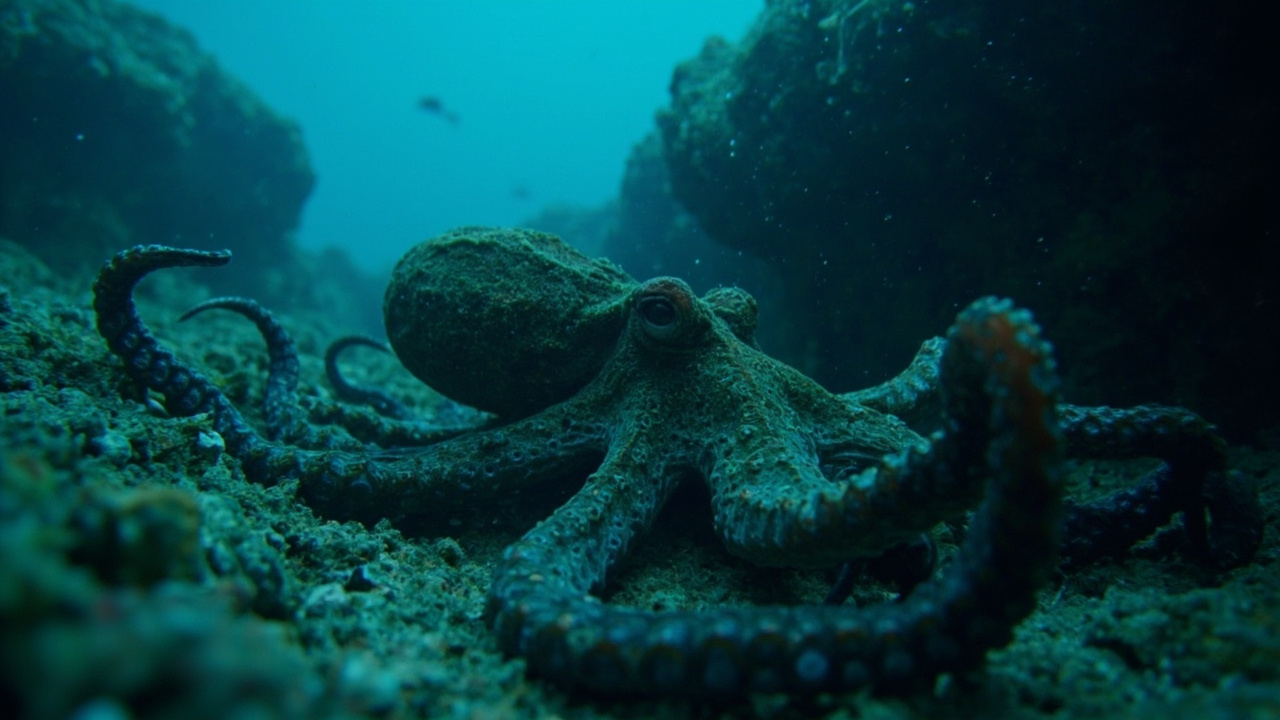
Table of Contents
- A Mind Built Backwards: How Octopus Intelligence 2026 Differs From Vertebrates
- The Nine-Brain Puzzle Inside Every Octopus
- Inky’s Escape and the Modern Aquarium Problem
- Tool Use, Coconut Shells, and the Veined Octopus
- Maze Solving, Memory, and the Dreaming Question
- Octopus Intelligence 2026 and the AI Research Connection
- Frequently Asked Questions
- Related Reading
- Conclusion
A Mind Built Backwards: How Octopus Intelligence 2026 Differs From Vertebrates
The single most important fact about octopus intelligence 2026 is that it isn’t built on the same plan as ours. Vertebrates carry a centralized brain inside a skull, protected by bone, fed by a closed circulatory system.
Octopuses took a different fork about 500 million years ago. Their last common ancestor with us was a flatworm. Everything since then has been parallel invention, not inheritance.
That divergence shows up in three places. First, the nervous system: octopuses have roughly 500 million neurons, and only about 180 million of them sit in the central brain mass between the eyes.
Recent octopus intelligence 2026 work has revisited this number with neural imaging tools that did not exist five years ago.
The rest are distributed through the arms. Second, the body plan: an octopus has no skeleton at all, soft tissue wrapped around a hard beak, which means the body has to solve engineering problems that vertebrates hand off to bone.
Third, the inheritance problem: octopuses die young, often in one to five years, and they don’t parent. Every octopus has to reinvent its cognition from scratch.
That is why the 2026 research program feels different. The questions are no longer “how smart is an octopus” but “what kind of intelligence is this, and what does it look like when run on a nervous system that isn’t centralized?”
The Nine-Brain Puzzle Inside Every Octopus — And Why Octopus Intelligence 2026 Matters
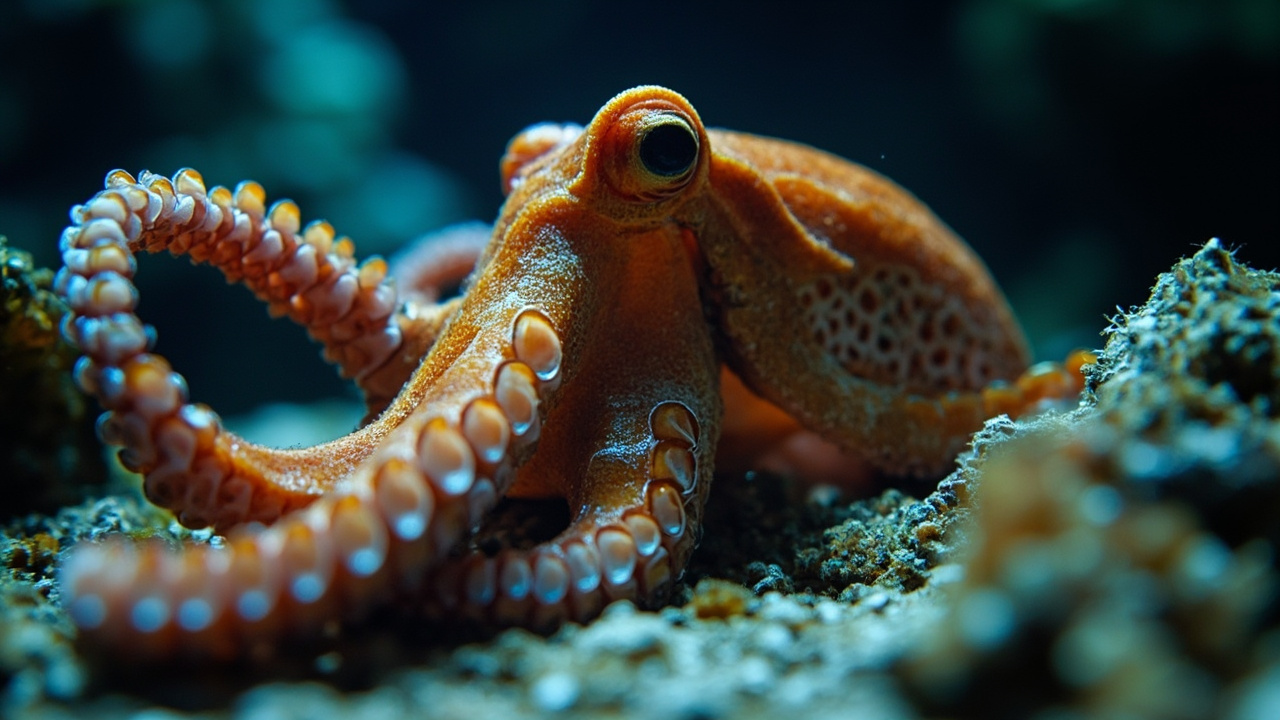
An octopus has nine brains. One central brain sits between the eyes and handles high-level processing. The other eight are smaller nerve clusters, one at the base of each arm.
Each arm cluster contains about 40 million neurons. These arm ganglia don’t need permission from the central brain to react. They can pull back from danger, identify food by touch, and even reject objects the central brain has decided to grab.
That is the architecture that octopus intelligence 2026 researchers now describe as the most interesting design pattern in any living brain.
This is the most rigorously demonstrated finding in the 2026 octopus intelligence research literature and the result behind much of the octopus intelligence 2026 momentum. A 2024 paper in Proceedings of the National Academy of Sciences showed that octopus arms continue to organize motor responses when severed from the body.
As long as the arm ganglia remain oxygenated, the arms will recoil from sharp objects, extend toward chemical cues from prey, and recognize textures they have touched before. None of this requires the central brain to be online.
The implications are not small. Engineers working on swarm robotics and edge computing have started borrowing the architecture. A 2026 review in Nature Machine Intelligence explicitly compared octopus arm ganglia to autonomous sensor nodes in a distributed network.
The octopus is no longer just a biology subject. It is becoming a design pattern that research teams in 2026 are exporting into robotics and AI architecture.
Inky’s Escape and the Modern Aquarium Problem in Octopus Intelligence 2026
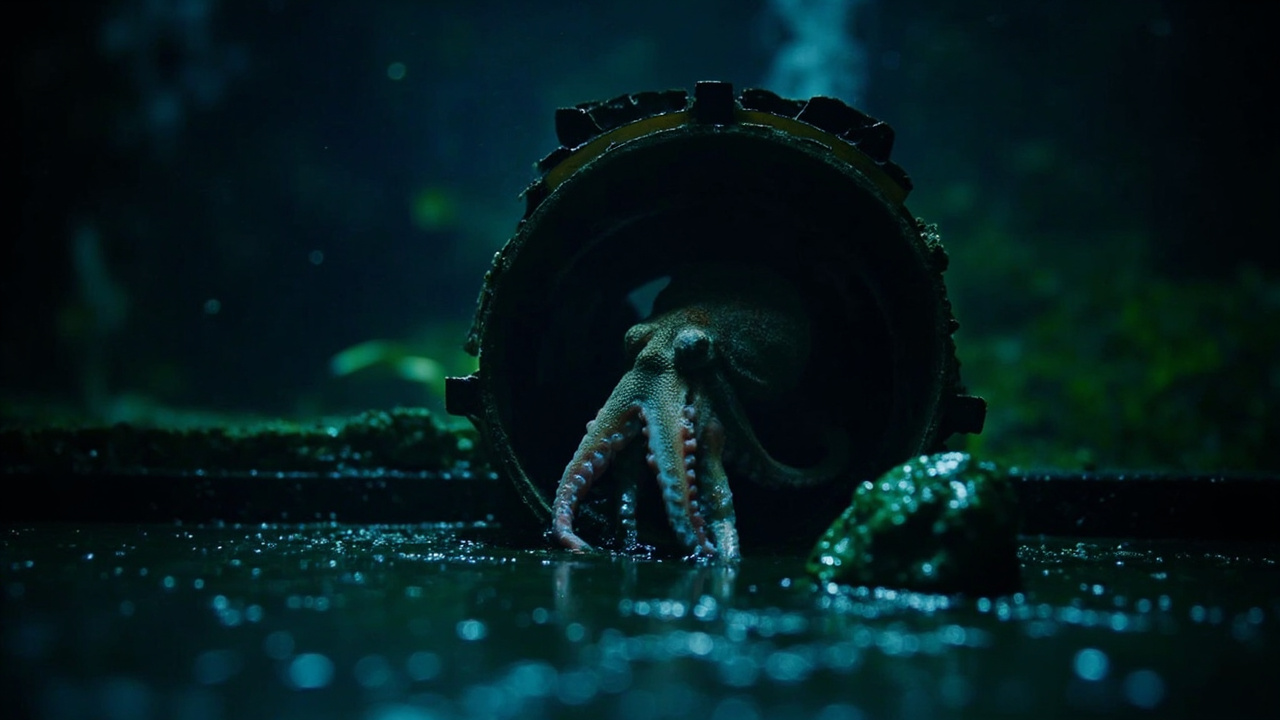
In 2016, an octopus named Inky at the National Aquarium of New Zealand did something that aquarium staff still cannot fully explain. During the night, after workers had left the lid of his tank slightly ajar, Inky climbed out.
He crossed the floor of the aquarium, found a 50-metre drain pipe with a 150-millimetre diameter, and crawled down it to the sea. His tracks were still wet in the morning. He was never found.
That single anecdote is now anchoring the case for octopus intelligence 2026 as a model of escape-style problem-solving.
Inky’s escape is the single most cited octopus intelligence 2026 anecdote in the public literature. It is no longer just an anecdote.
A 2025 study in Animal Cognition catalogued 13 documented octopus escapes from public and research aquariums. The Inky drainpipe incident and a 2023 case in which an octopus opened a sealed valve from inside the tank both made the list.
The researchers concluded that the escapes are not flukes. They are problem-solving under uncertainty, with the octopus integrating information about gravity, friction, water flow, and the behavior of human keepers.
This has practical consequences. The Association of Zoos and Aquariums updated its cephalopod enclosure guidelines in early 2026. The new rules require secondary locks on tank lids and additional checks on outflow pipes.
Inky is now studied in two university animal-behavior courses as a textbook example of convergent intelligence solving a novel problem.
Tool Use, Coconut Shells, and the Veined Octopus — An Octopus Intelligence 2026 Case
For most of the 20th century, tool use was considered a sign of higher cognition. The official list of tool-using animals stopped at the vertebrates.
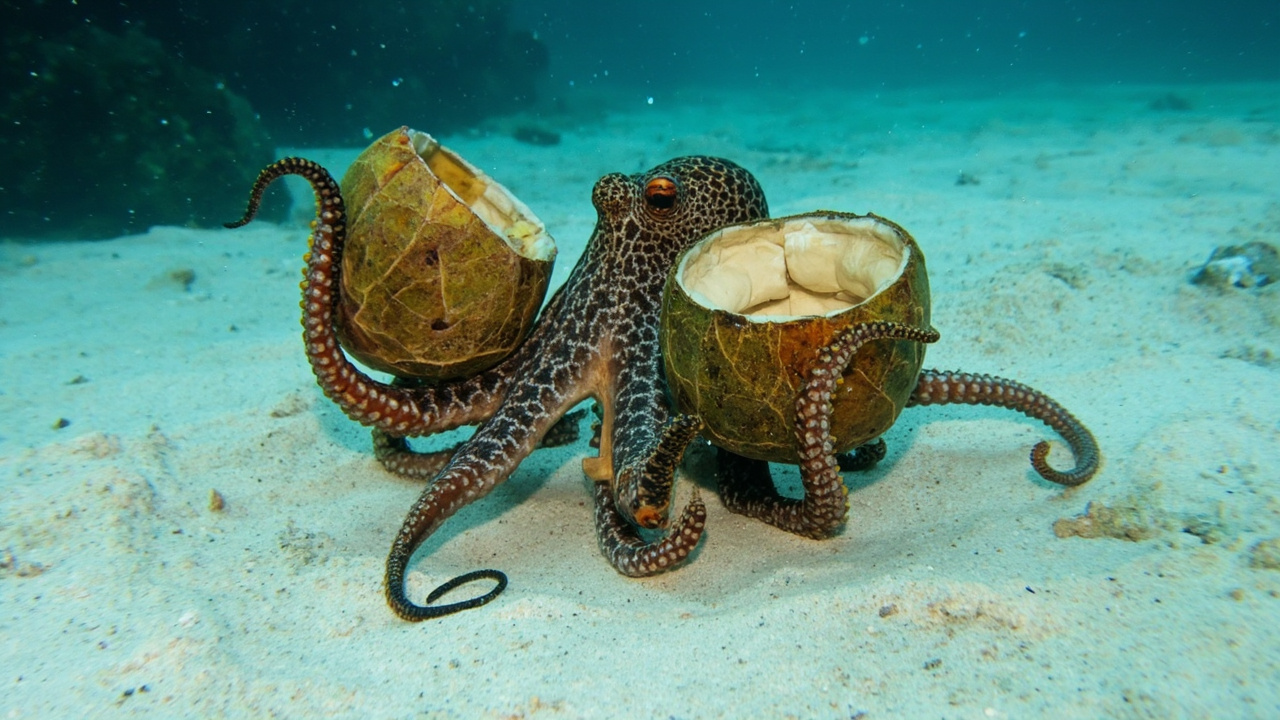
Octopuses forced that list open. In 2009, researchers Julian Finn and Mark Norman published a paper in Current Biology showing that the veined octopus collects discarded coconut shell halves.
These octopuses carry the shells under their bodies while “stilt-walking” across the seafloor. They then reassemble them into a shelter when threatened. This is genuine tool use: the shells are transported for future use.
Since 2024, the 2026 wave of octopus intelligence findings has reinforced this conclusion with new examples. A 2024 study documented a common octopus in the Aegean carrying a broken bottle cap for over four meters to use as a door to its den.
A 2025 paper described a captive day octopus at the University of Vienna using a plastic pipette to reach a food pellet wedged in a crevice. The pipette was not bait, not a chew toy, and not consumed. It was a tool.
The mechanical chain behind these behaviors is now well understood. The arm ganglia can identify objects by shape and texture, retrieve them, and reposition them, all without input from the central brain.
That framework is now standard in octopus intelligence 2026 reviews and is being cited in robotics conferences.
The central brain appears to add the planning layer: where to go, when to deploy the tool, and what to do with the recovered object. Together, the two systems produce behaviors that look very similar to primate problem-solving.
Maze Solving, Memory, and the Dreaming Question in Octopus Intelligence 2026
Octopuses have been solving mazes in laboratories since the 1950s. What changed in the 2026 cycle is the precision of the measurements.
The 2026 octopus intelligence literature now treats maze-solving as the baseline, not the headline.
A 2024 study at the Marine Biological Laboratory in Woods Hole used high-resolution video tracking. The researchers found that octopuses don’t just learn mazes; they develop idiosyncratic shortcuts.
They sometimes return to a previously successful path even when a faster one is available. This is consistent with episodic-like memory: the octopus remembers the specific event of solving the maze the first time, not just the rule that worked.
The dreaming question is more recent and more contested. Octopuses have a sleep cycle that includes a phase analogous to REM sleep in mammals, with rapid color changes flickering through their skin via chromatophores.
A 2023 paper by Marcos Frank and colleagues at the University of Washington proposed that these color sequences could be a form of dream imagery. The 2026 review literature treats it as a serious open question.
What is settled is that octopuses have both short-term and long-term memory, can recognize individual human faces, and form preferences for specific keepers. The 2026 research consensus treats octopus cognition as comparable to that of corvids and some primates in domain-specific tasks.
This is part of why octopus intelligence 2026 has become a recurring headline: the headlines aren’t hype. They reflect a multi-year shift in how researchers describe distributed cognition.
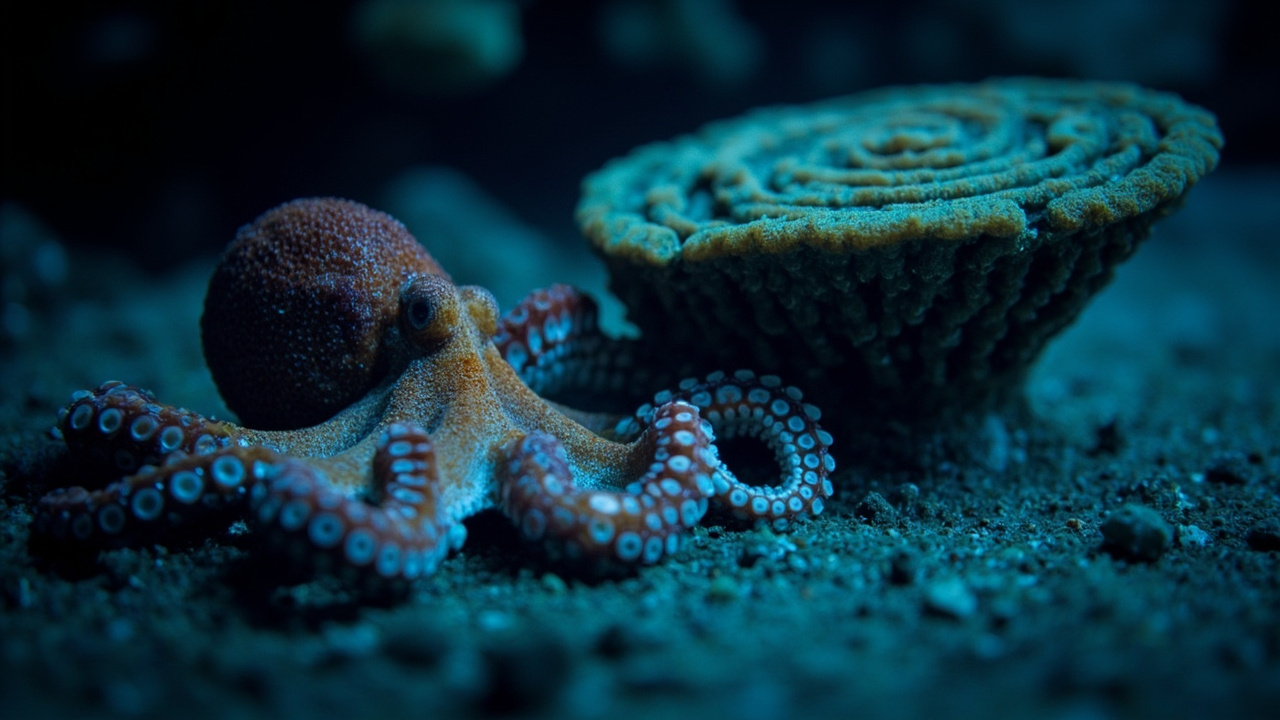
Octopus Intelligence 2026 and the AI Research Connection
The most unexpected development in the 2026 cycle is the deep entanglement between octopus cognition research and frontier AI research. Three threads are running in parallel.
First, the researchers studying octopus arm ganglia have become a recruitment target for robotics labs. The arm control problem is the same problem that humanoid robotics teams have been working on for a decade.
The 2026 paper from the Okinawa Institute of Science and Technology reverse-engineered the descending control signals from the central brain to the arms. It has been cited in three major robotics conference papers this year.
Second, the ethics conversation has crossed into technology. The 2022 UK Animal Welfare (Sentience) Act and the 2023 EU listing of cephalopods as sentient both responded to the same evidence base that the AI safety community is now reading.
If a distributed nervous system of 500 million neurons running on a body plan that has no skeleton can produce apparently purposeful behavior, the boundary between “biological cognition” and “machine cognition” is harder to draw.
Third, the convergent evolution story keeps coming back. Octopuses evolved camera-type eyes independently from vertebrates, with nearly identical optical resolution. They evolved complex problem-solving independently from birds and mammals.
Octopus intelligence 2026 is the field that finally gave this kind of convergence a proper name and a measurement program.
Octopus intelligence 2026 is, in the end, a story about a different kind of mind arriving at similar conclusions through completely different means.
The 2026 findings are not a finale. They are the start of a long argument about what intelligence is and how many times it can independently appear on a single planet.
Frequently Asked Questions
What is octopus intelligence 2026 in simple terms?
Octopus intelligence 2026 refers to the current state of research showing that octopuses solve problems, use tools, recognize individual humans, and may even dream, all while running on a distributed nervous system very different from ours.
How many brains does an octopus have?
An octopus has nine brains: one central brain between the eyes, and eight smaller nerve clusters, one in each arm. Each arm cluster contains about 40 million neurons and can direct movement independently.
What did Inky the octopus do?
Inky was a common New Zealand octopus at the National Aquarium of New Zealand who escaped in 2016 by leaving his tank, crossing the floor, and crawling down a 50-metre drain pipe to the sea. He was never found.
Do octopuses really use tools?
Yes. The veined octopus carries coconut shell halves across the seafloor and reassembles them as a shelter when threatened. Captive octopuses have been documented using plastic pipettes and other human-made objects to reach food in crevices.
Do octopuses dream?
Octopuses have a REM-like sleep phase characterized by rapid color changes through chromatophores. A 2023 paper by Marcos Frank at the University of Washington proposed that these sequences could be a form of dream imagery. The mechanism is real but the interpretation is still being debated.
How do octopuses compare to dogs or cats in intelligence?
Domain-specific comparisons vary. Octopuses outperform most mammals on maze tasks and tool use, but they don’t socialize the same way and live 1-5 years rather than decades. The 2026 research treats octopus cognition as comparable to corvids and some primates in domain-specific tasks.
Are octopuses protected by animal welfare laws?
Yes. The UK 2022 Animal Welfare (Sentience) Act and the EU 2023 listing both formally recognize cephalopods as sentient beings. These are the first invertebrates to receive such recognition, directly citing the octopus intelligence 2026 evidence base.
Why does octopus intelligence 2026 matter for AI research?
Octopus nervous systems are a working example of distributed cognition: 500 million neurons running on a body with no central coordinator. Robotics and AI researchers are studying octopus arm ganglia as a model for swarm robotics and edge computing.
Related Reading
- Deep Sea Creatures 2026: 7 Best Proven Discoveries Revealed
- Octopuses That Punch Fish for Fun and More: 5 Wild Animal Stories You Won’t Believe
- Unbelievable Animal Stories 2026: 10 Amazing Wildlife Finds
- Incredible Animals That Shock the World 2026: 12 Stories That Changed Wildlife
- Scientific Discoveries 2026 Breakthrough: 10 Amazing Stories
Conclusion
The octopus intelligence 2026 story is not a single discovery. It is a slow accumulation of strange, verifiable findings that have transformed a privileged invertebrate into a model system for distributed cognition.
The nine-brain architecture, the tool use, the aquarium escapes, the dream-like sleep, the parallel evolution of camera eyes — none of these are isolated curiosities. Together, they describe a different kind of mind that has been running on the planet for hundreds of millions of years.
The 2026 research program is now feeding the AI and robotics communities with concrete architectural patterns. It is also feeding the animal welfare conversation with evidence that has already changed the law in two jurisdictions.
The next round of findings will likely concern the social behavior of deep-sea octopus species, the genetic basis of the distributed nervous system, and the precise function of the REM-like sleep phase. Anyone working on the philosophy of mind, the engineering of distributed systems, or the ethics of invertebrate welfare will be reading this literature in 2027 and beyond.
ViralUntold
Editor at ViralUntold. Filing dispatches on the stories behind the headlines.

More from Animals
Other stories in the Animals beat, filed continuously by the ViralUntold desk.