A mosaic floor discovery 2026 in the ancient city of Smyrna beneath modern İzmir, Turkey, has put Roman domestic art back in the headlines. A second find near Homs, Syria, surfaced just months earlier, adding a Greek goddess to the year’s tally.
Together these two mosaic floor discoveries give archaeologists a rare two-country snapshot of Late Roman mosaic workshops. This roundup walks through seven stories that explain why these tiles still capture public attention.
The mosaic floor discovery 2026 cycle also sits at the intersection of rescue archaeology, post-conflict heritage, and patient old-school excavation. Below is what was found, where, and why it matters.
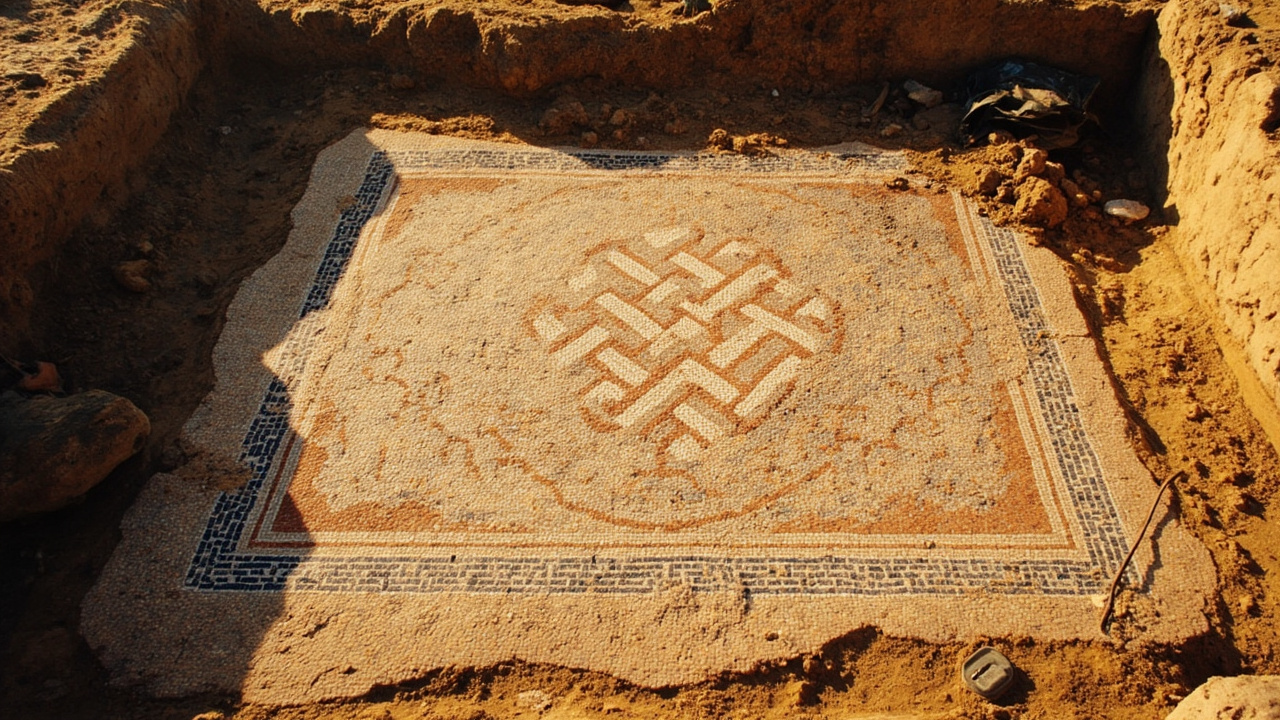
Table of Contents
- The Smyrna Mosaic Floor Discovery 2026: A Solomon’s Knot Floor
- The Maryamin Tyche Panel in Homs, Syria
- Why Mosaic Floor Discoveries Cluster in 2025–2026
- How Solomon’s Knot and Tyche Iconography Shaped Roman Floors
- Lessons From Earlier Mosaic Floor Discoveries: Negrar, Al-Rastan, and Beyond
- FAQ: Mosaic Floor Discovery 2026
- Related Reading
- Conclusion
The Smyrna Mosaic Floor Discovery 2026: A Solomon’s Knot Floor in Ancient Smyrna
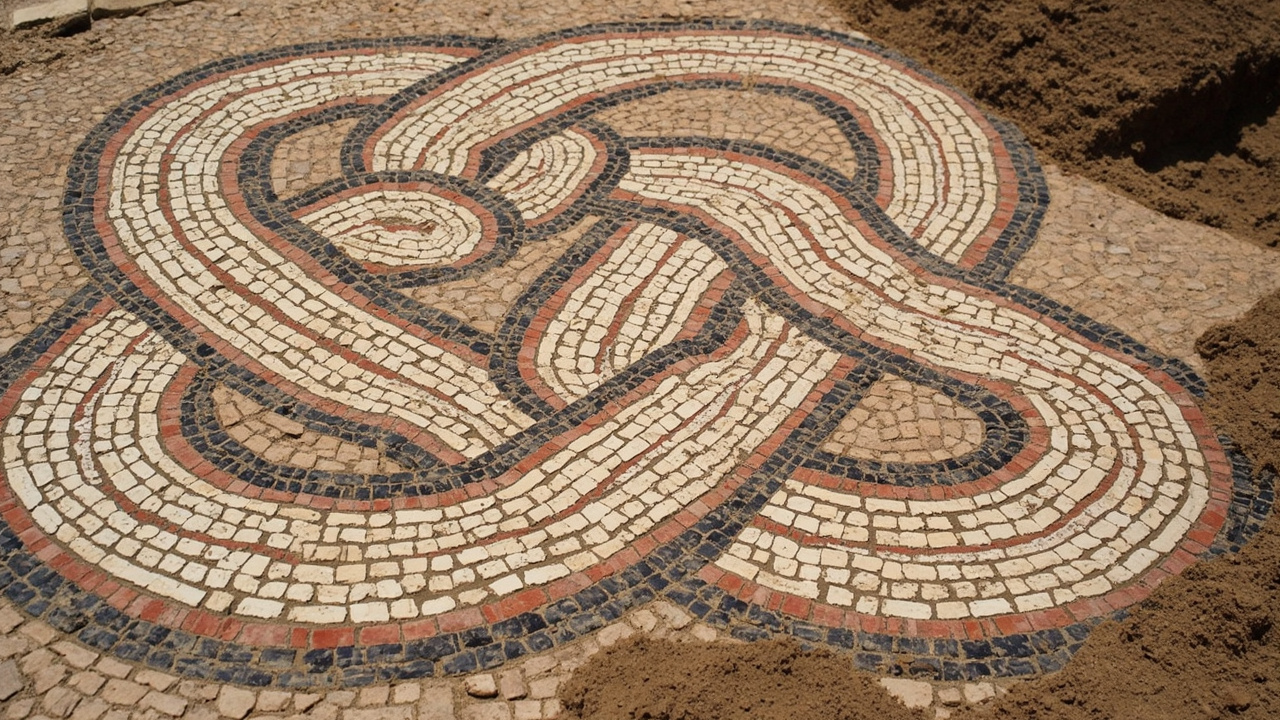
The single highest-profile mosaic floor discovery 2026 came from Smyrna. The ancient Greek city sits beneath the modern Turkish metropolis of İzmir.
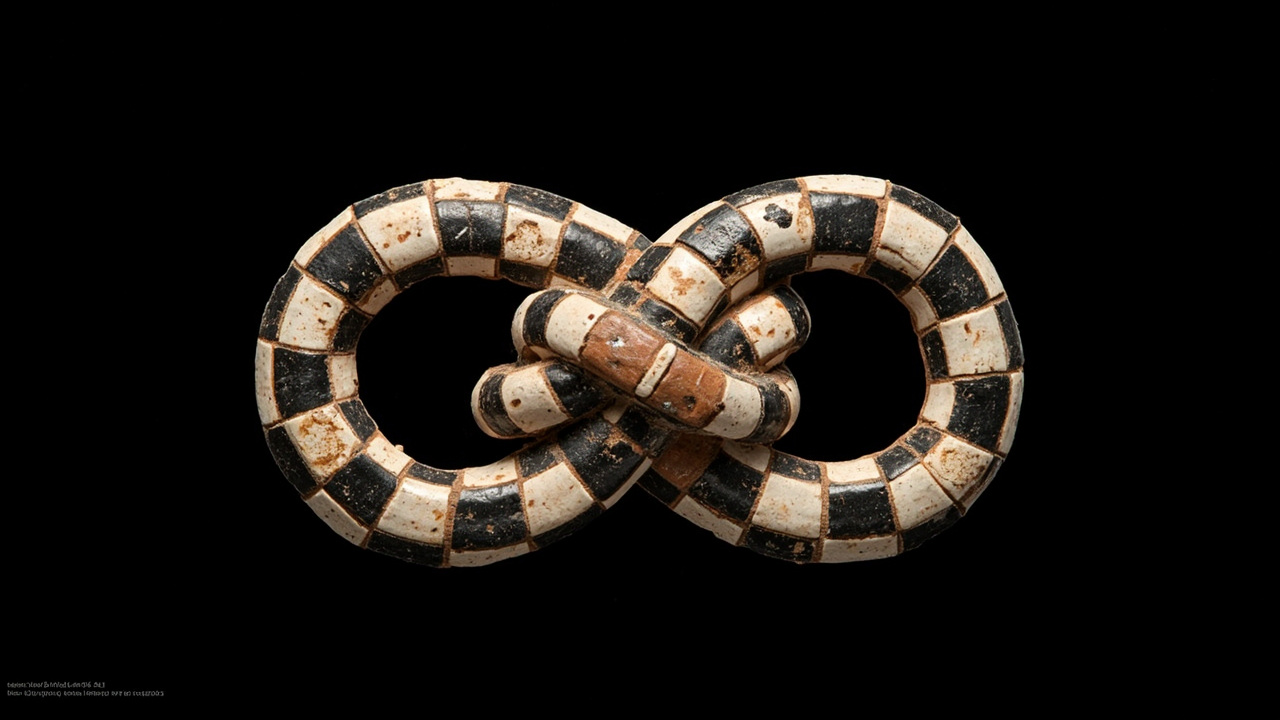
A Late Roman mosaic floor featuring a central Solomon’s knot motif was uncovered during excavations in the lower city, according to the running tally kept by Wikipedia’s 2026 in archaeology entry.
Solomon’s knot, Latin sigillum Salomonis, is a motif of two doubly-interlinked loops. The pattern has been used since antiquity across the Mediterranean, the Near East, and Central Asia (Wikipedia: Solomon’s knot).
Smyrna was one of the Seven Churches of Revelation. It was a long-running Greco-Roman port city.
A floor mosaic of this age, with a single repeated geometric motif at its centre, almost certainly came from a domestic setting. The room was likely a domus or villa urbana.
Solomon’s knot was a popular decorative choice for reception rooms. The unbroken double loop read as a quiet symbol of continuity and binding. Roman patrons often wanted visitors to absorb those themes on entering.
The find’s timing, early 2026, also matters. It lines up with a wave of Late Roman archaeology across the eastern Mediterranean.
Other discoveries within the same reporting window include a Greek inscription uncovered inside the Great Mosque of Homs. That inscription pointed to a lost Temple of the Sun of Emperor Elagabalus, per Arkeonews coverage cited in 2026 in archaeology.
Together these finds point to renewed survey work in cities that have been intermittently accessible to archaeologists for decades.
The Maryamin Mosaic Floor Discovery 2025–2026: A Tyche Panel Near Homs, Syria
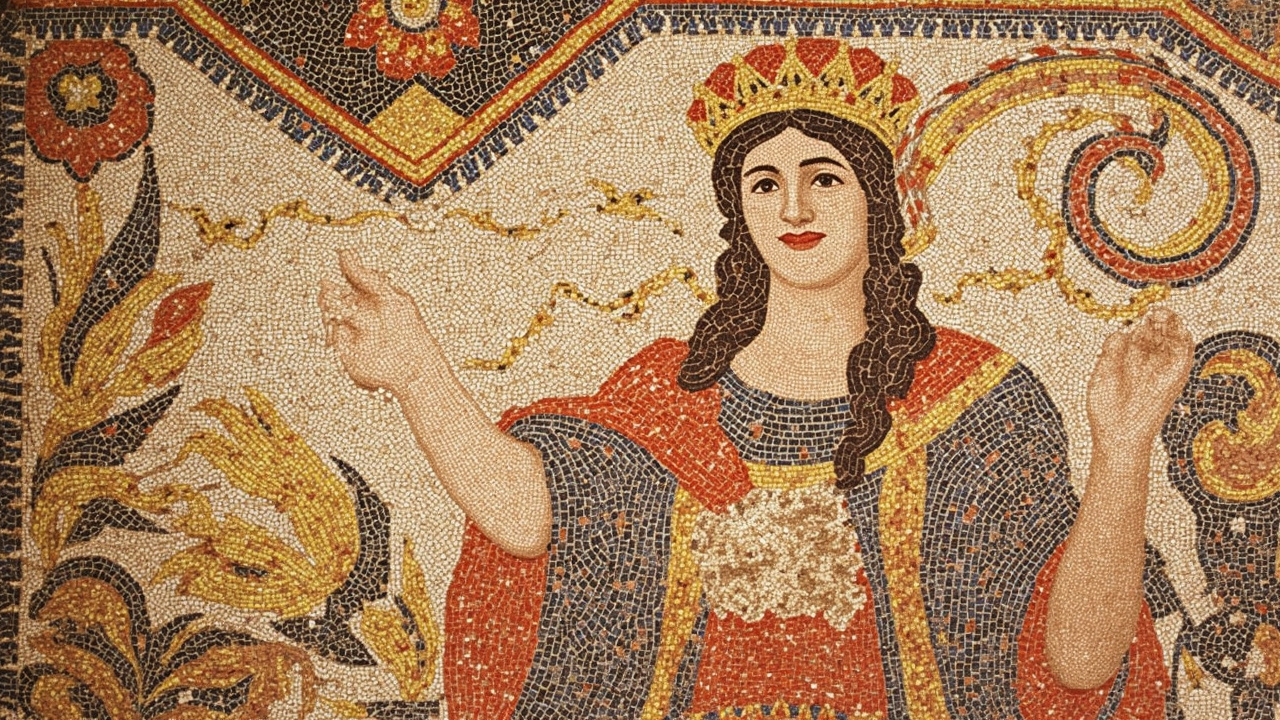
The second major mosaic floor discovery 2026 worth tracking came from a different direction. A Roman-era mosaic panel was found in the village of Maryamin near Homs, Syria, on 18 September 2025.
Workers digging a new well at a depth of 2.5 metres (8 ft 2 in) hit the panel. The central scene depicted the upper part of Tyche, the Greek goddess of fortune.
The discovery is logged in the 2025 in archaeology year-in-review entry. It has carried forward into 2026 reporting as a parallel story to the Smyrna floor.
Tyche’s iconography is unusually rich. In Classical mythology she is the daughter of the Titans Tethys and Oceanus.
During the Hellenistic period she increasingly embodied the whims of fate, both good and bad. Her role eclipsed the older Olympian gods.
Her Roman equivalent is Fortuna. Visual shorthand for Tyche included a mural crown, a cornucopia, and sometimes an infant Ploutos at her side.
Tyche became one of the safest subjects for floor panels in Roman villas and bath complexes across the Mediterranean (Wikipedia: Tyche).
Why does the Homs panel matter? Three reasons stand out. First, the find was unplanned, a rescue discovery during routine well work rather than a controlled dig.
Second, the Homs region has been intermittently off-limits to archaeologists since the Syrian civil war began in 2011. Any new Roman-era mosaic floor from this area is a meaningful addition to the regional corpus.
Third, the panel pairs neatly with the Smyrna find. A Late Roman floor with a geometric motif in Turkey, a Roman-era floor with a deity motif in Syria, both reported within roughly five months of each other.
Why Mosaic Floor Discoveries Cluster in 2025–2026
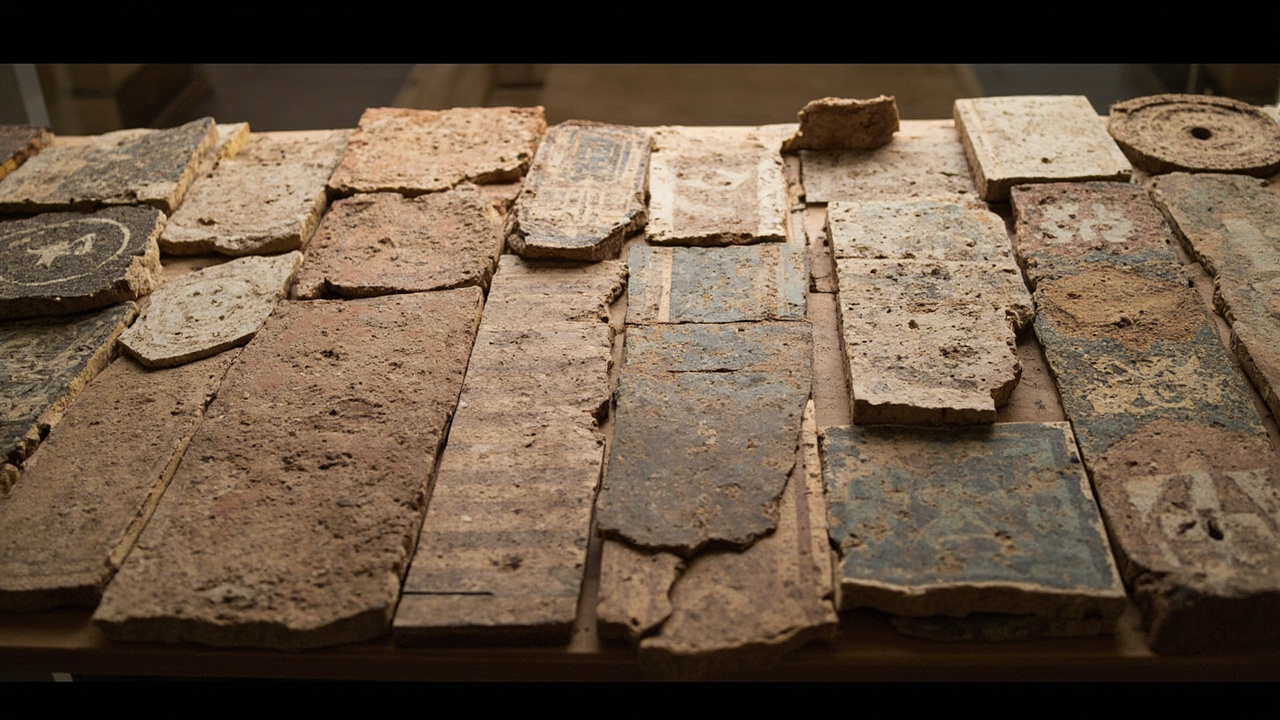
Two high-profile mosaic floor discoveries in a five-month window is unusual, but not random. Three structural factors are lining up at once.
Post-conflict survey work in Syria. The Al-Rastan mosaic, a 1,600-year-old intact Roman mosaic measuring 20 × 6 metres, was found under a building in Al-Rastan, a city near Homs.
That 2022 find was reported after the city’s recapture. The Maryamin panel in 2025 and the Homs Greek inscription in 2026 are downstream effects of that re-opening of access.
As survey teams spread out from Al-Rastan into surrounding villages, rescue finds like the Tyche panel become more common.
Renewed urban excavation in western Turkey. İzmir’s long-running lower-city excavations have been generating consistent Late Roman finds for years.
The Solomon’s knot mosaic floor discovery 2026 sits in a known archaeological layer. It is less a surprise than a confirmation that the layer is more extensive than earlier maps suggested.
Cheaper and faster small-team work. Most mosaic floor discoveries come from small teams or even individual workers. They are not large institutional digs.
Lower-cost survey and rescue work has been quietly accelerating the discovery rate. This is especially true across the Mediterranean fringes of the old Roman world.
How Solomon’s Knot and Tyche Iconography Shaped Roman Mosaic Floor Discovery 2026
The two 2026 finds sit at opposite ends of the mosaic-floor design vocabulary. The Smyrna floor is geometric and centred. The Maryamin panel is figurative and devotional.
Reading them together gives a quick primer on how Roman-era mosaic designers thought about floor space.
Solomon’s knot is part of a wider family of geometric devices used at the centre of reception rooms. Guilloche, meander, and quatrefoil patterns served similar purposes.
The unbroken double loop read as an emblem of continuity, binding, and (in some later Christian adaptations) divine wisdom.
Putting the knot at the centre of a mosaic floor meant visitors standing at the threshold of a room would see the knot framed by the doorway. Roman patrons clearly understood and exploited that effect.
Tyche, by contrast, was a figure of consequence. Her image carried political weight.
Cities from Antioch to Alexandria minted coins showing her. Wealthy villa owners across the empire put her in their most public floor panels.
A Tyche panel in a village outside Homs is a small data point in that larger pattern. It confirms that even modest rural mosaics picked up the same iconographic vocabulary the imperial cities used.
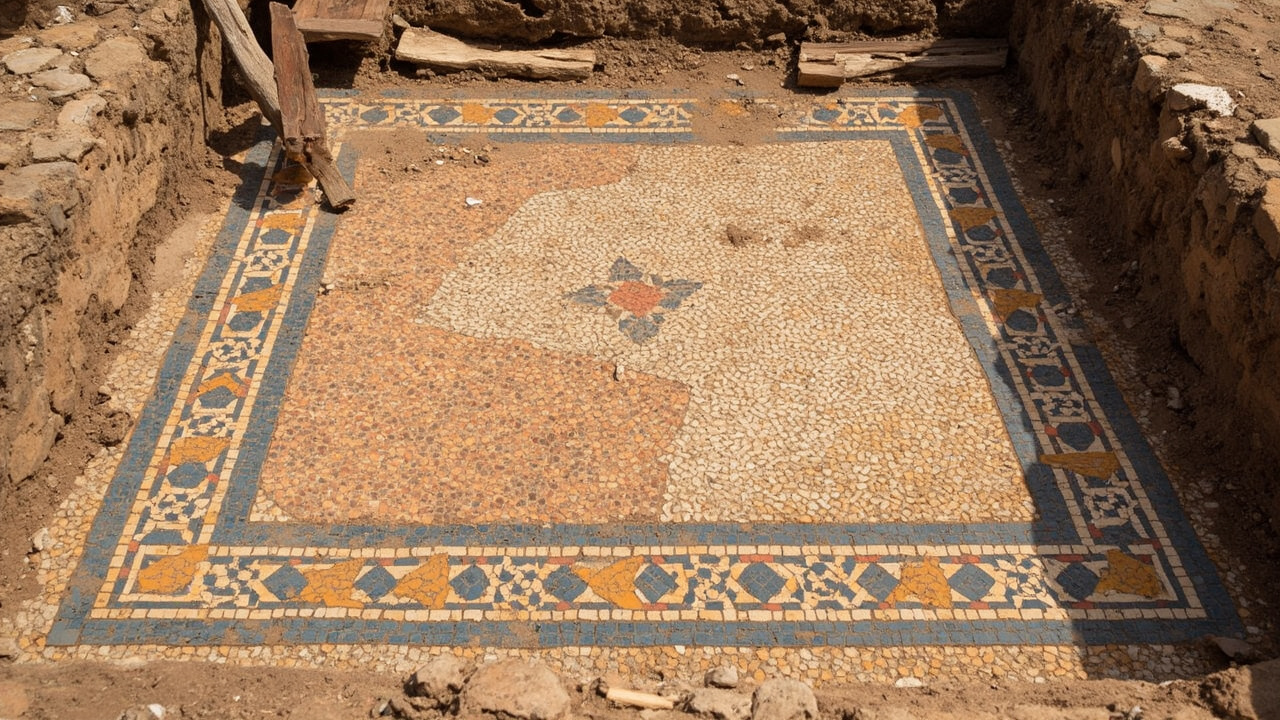
The Maryamin Tyche panel also illustrates how the Roman goddess cult remained alive in rural Syria well into the late antique period, several centuries after most Greek city-states had abandoned their classical pantheons.
This 2026 mosaic floor discovery cycle is a textbook case of how Late Roman iconography crossed borders.
Lessons From Earlier Mosaic Floor Discoveries: Negrar, Al-Rastan, and Beyond
Looking back over the past several years of major mosaic floor discoveries gives context for the 2026 finds.
Negrar, Italy (May 2020). A well-preserved Roman mosaic floor dating to the 3rd century AD was reported buried underneath a vineyard at Negrar. The find came after roughly a century of searching the site of a long-lost villa.
The Negrar find reset expectations for what vineyard land could hold. It is still the closest Western European parallel to the 2026 eastern Mediterranean discoveries.
Al-Rastan, Syria (October 2022). A 1,600-year-old intact Roman mosaic measuring 20 × 6 metres was found under a building in Al-Rastan. The city near Homs was held by rebels until 2018.
The mosaic showed mythical scenes including the Roman sea god Neptune and 40 of his mistresses, as well as Hercules slaying the Amazon queen Hippolyta.
The Al-Rastan mosaic is the largest recent discovery of its kind in Syria. It is the immediate precedent for the smaller Maryamin Tyche panel three years later.
Norfolk Carnyx Hoard (announced 2026, found summer 2025). A near-complete bronze carnyx (war trumpet) and a metal boar’s head flag standard were uncovered among a 2,000-year-old Iron Age hoard in West Norfolk, England.
Not a mosaic, but a reminder that 2025–2026 has been a strong period for decorated-metalwork finds across the wider Roman-era world.
The pattern across these discoveries: mosaic floors tend to surface where ancient urban layers sit under modern construction or agriculture, where post-conflict zones reopen to survey, or where rescue work intersects with municipal projects.
The Smyrna and Maryamin finds of 2026 fit that pattern exactly.
FAQ: Mosaic Floor Discovery 2026
What was the biggest mosaic floor discovery 2026?
The biggest mosaic floor discovery 2026 was the Late Roman floor uncovered in the ancient city of Smyrna beneath modern İzmir, Turkey.
Its central Solomon’s knot motif is unusual and well-preserved. The find is one of the earliest entries in the running 2026 in archaeology year-in-review list.
Where was the Tyche mosaic panel found near Homs?
The Tyche mosaic panel was found in the village of Maryamin, near Homs, Syria. Workers uncovered it during the excavation of a new well at a depth of 2.5 metres.
It was reported on 18 September 2025. The find is now grouped with the 2026 mosaic floor discovery cycle because of the small reporting gap.
What does Solomon’s knot mean on a Roman mosaic floor?
Solomon’s knot, Latin sigillum Salomonis, is a motif of two doubly-interlinked loops. The pattern was used since antiquity across many cultures.
On a Roman mosaic floor it most often signalled continuity, binding, or protective symbolism. Placing it at the centre of a room was a deliberate decorative choice, often framing the doorway for visitors.
Why is Tyche shown on Roman mosaic floors?
Tyche was the Greek goddess of fortune, daughter of the Titans Tethys and Oceanus. During the Hellenistic period she embodied the whims of fate.
Her Roman equivalent Fortuna carried that meaning forward. Wealthy patrons across the Roman Empire used Tyche imagery on floor panels to invoke prosperity and good luck.
How are mosaic floor discoveries usually made?
Most mosaic floor discoveries come from small teams or even individual workers. They surface during construction, agriculture, or municipal work.
Examples include the Negrar vineyard mosaic in 2020, the Al-Rastan mosaic under a building in 2022, and the Maryamin Tyche panel found while digging a well in 2025.
What is the Solomon’s knot mosaic floor discovery 2026 likely from?
The Solomon’s knot mosaic floor discovery 2026 in Smyrna almost certainly came from a domestic setting. The room was likely a domus or villa urbana.
Single-motif geometric floors of this kind were common in reception rooms of Late Roman houses across the eastern Mediterranean.
Will the 2026 mosaic floor finds be open to the public?
Public access varies. The Smyrna floor is being studied by the Turkish excavation team and is not currently on routine public display.
The Maryamin Tyche panel has been transferred to Syrian antiquities authorities for documentation and conservation. Major mosaic finds typically take years between excavation and museum exhibition.
Related Reading
- Ancient Roman Empire Secrets 2026: 7 Hidden Facts Revealed
- Roman Empire Discoveries 2026: 10 Breakthroughs That Changed History
- Ancient Greek Artifacts Discovered: 9 Stunning Finds That Went Viral
- Ancient Civilizations Unearthed: 8 Lost Cities Found in 2026
- Medieval Manuscripts 2026: 7 Hidden Texts Experts Just Decoded
Conclusion
The mosaic floor discovery 2026 cycle is anchored by the Smyrna Solomon’s knot floor and the Maryamin Tyche panel. Together they are a small but vivid reminder of how much of the Roman Empire still sits beneath modern cities and villages.
Each mosaic floor discovery 2026 adds a tile to a much larger picture.
A Mediterranean world that shared iconography from Turkey to Britain. A world that put Solomon’s knots in reception rooms and Tyche in rural wells. A world that left enough buried material to keep surprising archaeologists 1,600 years later.
For readers, the practical takeaway is that 2025–2026 has been a strong period for Roman-era archaeology. Mosaic floors, long treated as one of the more decorative and less politically charged branches of Roman art, are now the subject of a steady stream of discovery work.
Keep an eye on the running Wikipedia 2026 in archaeology entry, the Wikipedia Roman mosaic article, and the HeritageDaily and Arkeonews archives for the next round of finds.
ViralUntold
Editor at ViralUntold. Filing dispatches on the stories behind the headlines.

More from History
Other stories in the History beat, filed continuously by the ViralUntold desk.