


Whale Migration Mystery 2026: 7 Best Hidden Stories Revealed
The whale migration mystery 2026 has gripped marine biologists, citizen scientists, and ocean lovers across the planet. Every winter and summer, hundreds of thousands of cetaceans cross entire ocean basins without maps, compasses, or GPS. They navigate by Earth’s magnetic field, ocean temperature gradients, and possibly memory passed down through generations.
Yet despite a century of research, most of the timing, route choices, and decision-making behind whale migration 2026 still defies explanation. This guide walks through seven remarkable cases that are reshaping what we think we know about the open ocean.


Table of Contents
- 1. Why Humpback Migration Is the Only Fully Mapped Route
- 2. The 5,000-Year Gray Whale Atlantic Mystery
- 3. Humphrey the Whale and the 1985 Wrong-Way Saga
- 4. Hvaldimir: Russia’s Spy Beluga and His Final Journey
- 5. The Deep-Dive Ghosts of the Beaked Whale Family
- 6. Blue Whale Earwax: A Time Capsule Hidden in a Skull
- 7. Ship Strike Corridors and the North Atlantic Right Whale
- Frequently Asked Questions
1. Why Humpback Migration Is the Only Fully Mapped Route — and the Whale Migration Mystery 2026 That Hides Behind It
Humpback whales are the marathon champions of the sea. Each year, North Pacific humpbacks travel more than 5,000 miles between cold-water feeding grounds near Alaska and warm-water breeding lagoons off Mexico.
Researchers have spent decades photo-identifying individual flukes and matching them across ocean basins, which is why the humpback is the only large whale whose migration calendar is mapped in detail.
Yet for nearly every other cetacean species, the whale migration mystery 2026 deepens rather than resolves. The Wikipedia overview of whales states plainly: “With the exception of the humpback whale, the timing of whale migration is largely unknown.” That single sentence frames the entire field.
Even for blue whales, fin whales, and minkes — species that scientists have tracked since the 1970s — basic questions about route timing remain open.
Researchers in 2026 use a combination of satellite tags, photo-ID catalogs, acoustic recordings, and even genetic sleuthing to fill in the gaps. Each humpback fluke carries a unique pattern, much like a fingerprint, and citizen scientists contribute thousands of photos every year.
The result is a living migration map that updates in near real time as new matches arrive from coastal spotters, research vessels, and whale-watching boats.
What humpbacks have taught us is that whales do not migrate the way birds do. Birds follow learned flyways with predictable turn points. Whales instead appear to weight a constantly changing set of cues: water temperature, prey density, day length, predator presence, and even social cues from other whales.
That flexibility is part of what makes the whale migration mystery 2026 so hard to pin down.
2. The 5,000-Year Gray Whale Atlantic Mystery: Inside the Whale Migration Mystery 2026
Gray whales carry one of the most surprising genetic stories in the ocean. A landmark DNA study revealed that over the past 100,000 years, gray whales have crossed between the Pacific and the Atlantic multiple times. The most recent large-scale transit happened around 5,000 years ago — long before written history, but well within the reach of genetic clocks.
That history helps explain a modern puzzle. Western North Atlantic right whales and Atlantic gray whales have appeared sporadically in recent decades, including sightings off the East Coast, Israel, and the Mediterranean. The arrivals have fueled speculation that climate shifts, ice-loss, and shifting prey are reopening an ancient corridor.
Every Atlantic sighting of a gray whale feeds the whale migration mystery 2026 with new data.
Satellite tagging in 2024 and 2025 has confirmed that individual gray whales occasionally loop the Pacific Rim or pause in unexpected bays. Researchers at the Marine Mammal Commission have logged over a dozen atypical sightings per year since 2020, a rate that would have shocked field biologists in the 1990s.
Each tag deployment costs thousands of dollars and lasts only weeks to months, yet every recovered track contributes one more piece to a five-millennium-old puzzle.
For researchers tracking the whale migration mystery 2026, those atypical Atlantic sightings are no longer dismissed as anomalies. They are now treated as central evidence in a five-millennium-long experiment in ocean navigation.
If gray whales can reach the Atlantic again, what does that mean for North Atlantic right whales, which hover near extinction? Could ancient corridors open once more? The answers matter for shipping lanes, fisheries, and conservation law, which is why a single rare sighting now triggers international discussion among scientists tracking the whale migration mystery 2026.
3. Humphrey the Whale and the 1985 Wrong-Way Saga That Defined the Whale Migration Mystery 2026
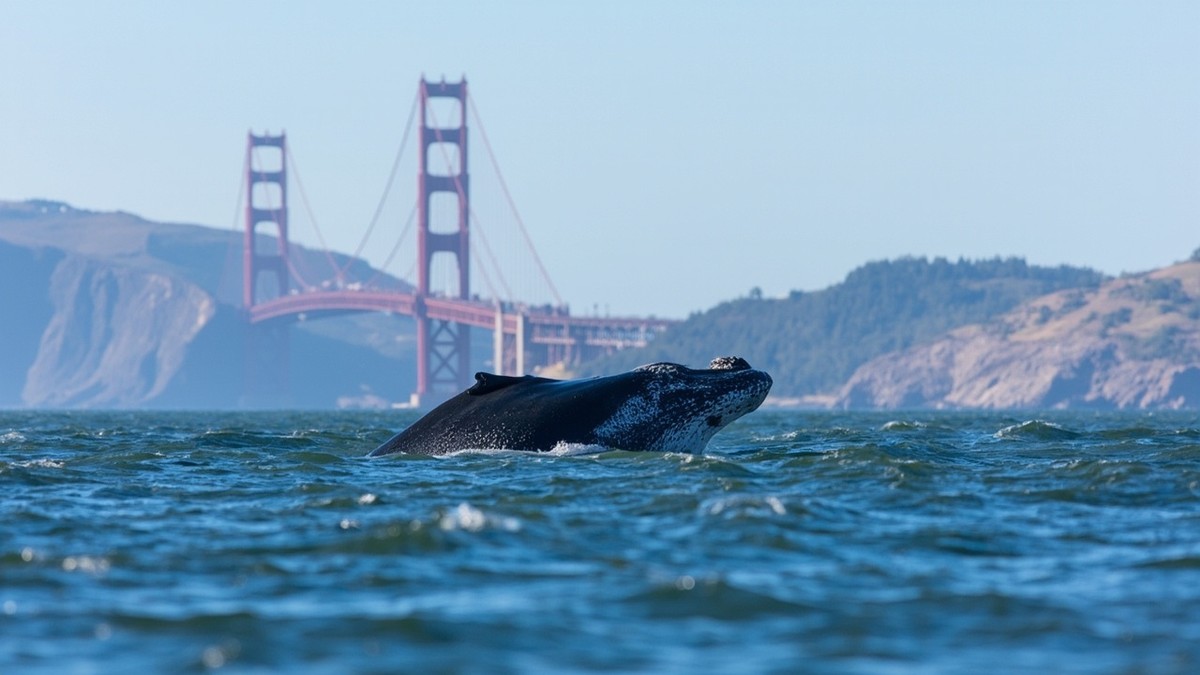
Few migration stories capture public imagination like Humphrey the Whale. In 1985, a young humpback swam more than 60 miles inland up the Sacramento–San Joaquin River Delta, far past where any whale had any business being. He was lost, disoriented, and surrounded by shallow freshwater that whales cannot survive in for long.
What followed became one of the most watched wildlife rescue operations in California history. Hundreds of volunteers, the Coast Guard, and the Marine Mammal Center worked together to coax Humphrey back toward the Golden Gate. They played recorded humpback calls, gently nudged him with boats, and waited for tides to help.
Within days, Humphrey found his way back to the Pacific.
He did it again in 1990. The same whale, now identifiable by fluke patterns, returned to San Francisco Bay. The second rescue played out almost identically, with hundreds of volunteers and the same agencies responding.
The last confirmed sighting came near the Farallon Islands in 1991.
Humphrey became a touchstone case study in navigation research, and every modern wrong-way whale rescue is compared to his story.
For the whale migration mystery 2026, Humphrey matters because he shows how a single navigational error can happen to a species with one of the most accurate maps in the ocean.
If a humpback can get lost in California, what does that say about the cues other whales use — and how vulnerable are they when those cues shift due to climate change or industrial noise?
4. Hvaldimir: Russia’s Spy Beluga and His Final Journey — A Whale Migration Mystery 2026 Case
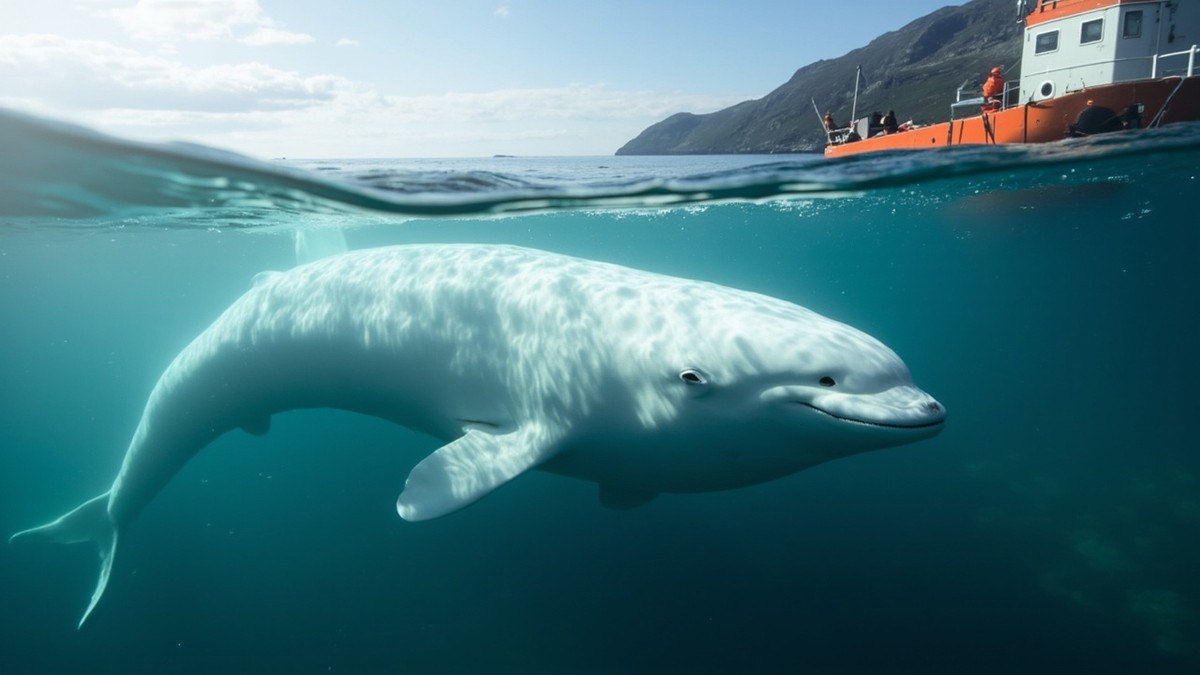
In 2019, a beluga whale wearing a GoPro-style harness appeared in waters near Hammerfest, Norway. He approached boats, behaved like a trained animal, and refused to leave. Norwegian marine biologists freed him from the harness, but the whale stayed.
Theories circulated that he had escaped from a Russian military program, and the press dubbed him Hvaldimir — a portmanteau of the Norwegian word for whale (hval) and Vladimir.
Hvaldimir’s range expanded over the next five years. By 2023, he had been spotted along the south-western coastline of Sweden, hundreds of kilometers from where he first appeared. He approached divers, ate offered fish, and showed no fear of humans.
Each sighting deepened the whale migration mystery 2026 — was this a single animal, or were others with him?
On 31 August 2024, Hvaldimir was found dead in Risavika Bay, near Stavanger in Norway. Activist groups claimed he had been shot. A necropsy confirmed gunfire was not the cause, though the precise reason for his death remains debated in marine science circles.
Ukrainian researcher Olga Shpak later identified him as Andruha, a beluga captured in the Sea of Okhotsk in 2013.
Whatever his true origin, Hvaldimir showed that an individual whale can travel an entire coastline over several years. He also reminded researchers that migration is not only about feeding and breeding. Sometimes a single animal follows its own path, defined by curiosity, attachment to humans, or some unknown internal compass.
That openness is part of what keeps the whale migration mystery 2026 alive.
5. The Deep-Dive Ghosts of the Beaked Whale Family and the Whale Migration Mystery 2026
If you have never heard of beaked whales, you are not alone. They live in deep offshore waters, surface rarely, and dive for so long that most research vessels cannot keep up with them. Some species have been identified only from stranded carcasses.
Their average size ranges from 4 to 13 meters, but their behavior makes them the deepest divers on Earth.
Cuvier’s beaked whales have been recorded diving below 2,900 meters and holding their breath for more than three hours. To put that in perspective, a typical scuba dive lasts 20 to 40 minutes, and submarines must surface regularly. Beaked whales do it routinely, foraging on squid and deep-sea fish in total darkness and crushing pressure.
The whale migration mystery 2026 has a particular focus on beaked whales because their movements are so poorly understood. Most records come from acoustic detections, sonar contacts, and strandings. Reports emerging in late 2020 linked several unusual mass strandings to naval sonar exercises, suggesting the whales’ deep-dive behavior may make them uniquely vulnerable to loud noise.
For 2026, multi-national research teams are deploying DTAGs — short-duration digital recording tags — that capture every flipper stroke, every dive, and every sound the whale makes. The hope is that enough data will reveal migration corridors we currently cannot see.
Each new DTAG dataset feeds directly into the whale migration mystery 2026, the largest open-source cetology project of the decade. Until then, beaked whales remain the ghosts of the ocean: present everywhere, observed almost nowhere.
6. Blue Whale Earwax: A Time Capsule Hidden in a Skull
Blue whales are the largest animals ever to exist on Earth. Yet their migration patterns remain surprisingly hard to track. They spend most of their lives offshore, dive for 10 to 20 minutes at a time, and rarely approach boats.
Satellite tags fail within weeks because the tags eventually detach, and recovery at sea is rare.
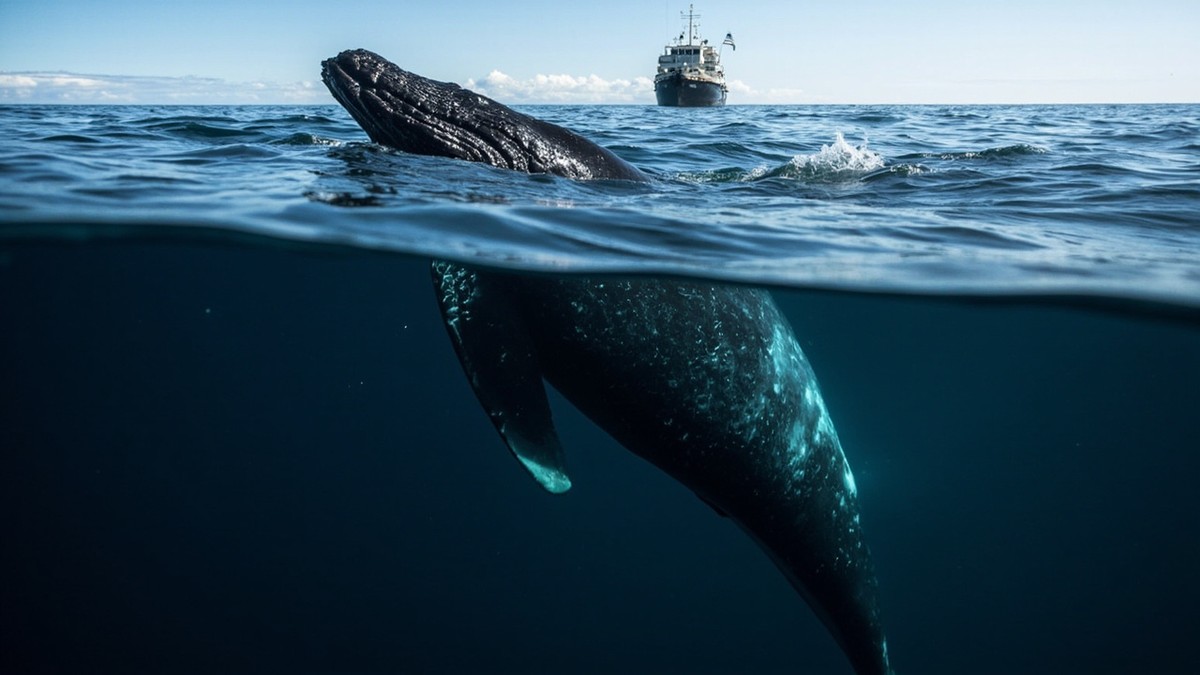
So scientists turned to an unusual source: earwax. Blue whales, like all baleen whales, accumulate wax in their ear canals throughout their lives. Each year lays down a light and dark layer, similar to tree rings.
Researchers can read the layers like a calendar, then sample chemicals from each band to reconstruct diet, hormone exposure, and pollution load over an individual whale’s lifetime.
That earwax archive has revealed that blue whale migration is partial and age-based. Juveniles, mothers with calves, and adult males do not follow the same routes. Some populations show year-round residency.
Others migrate in patterns that no current model predicts. Every earplug studied adds another chapter to the whale migration mystery 2026.
The method has also shown how blue whales were exposed to industrial pollutants and wartime sonar decades before anyone tracked them directly. Researchers in 2025 published a paper using 60-year-old earwax to reconstruct blue whale stress hormone spikes during Cold War naval exercises.
The whale migration mystery 2026 is no longer just about where they go — it is about what they have lived through.
7. Ship Strike Corridors and the North Atlantic Right Whale
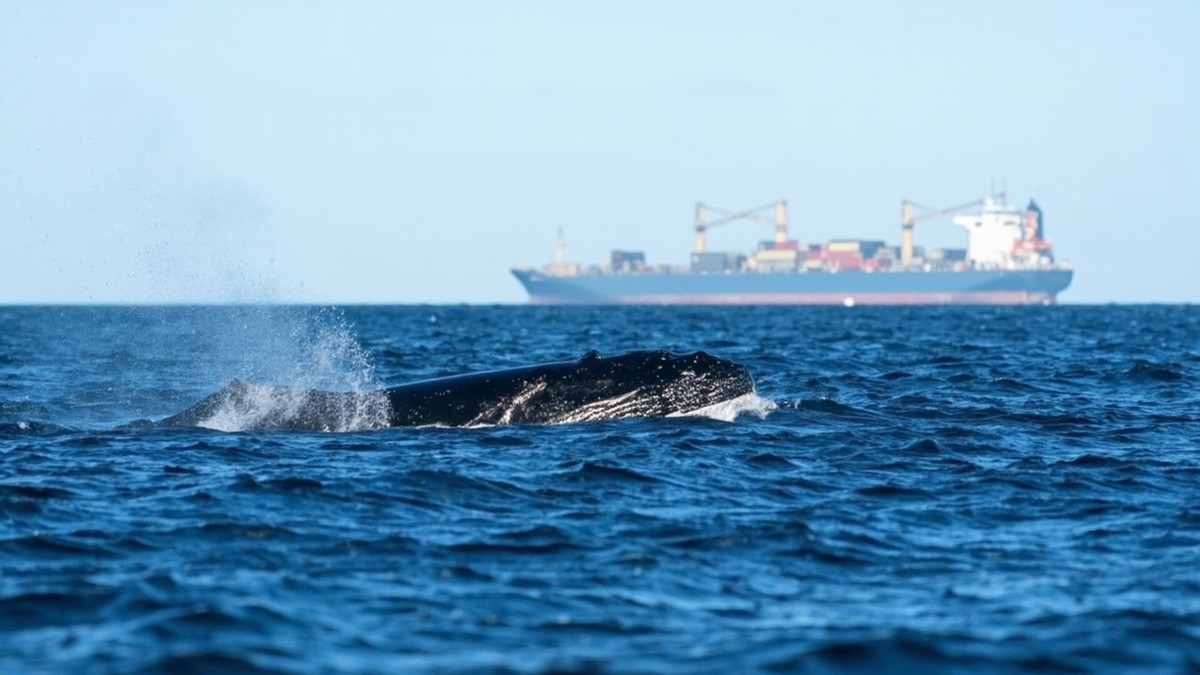
The North Atlantic right whale is one of the most endangered large whales on the planet. Fewer than 360 individuals remain, and every death moves the species closer to extinction. The single biggest human threat is not hunting — it is ship strikes.
Container ships and bulk carriers moving in and out of East Coast ports regularly cross the whales’ migration corridors.
The skeleton of a famous right whale nicknamed “Stumpy” helped drive the laws that require slower cargo ship speeds in whale migration routes. Stumpy lost part of her tail to a propeller and was tracked for years before she finally died.
Her case became a catalyst for NOAA’s vessel speed rules, which now mandate reduced speeds in zones where right whales are known to travel.
The eastern North Atlantic population is even smaller — numbers in the low double digits at best — and almost nothing is known about their distribution or migration pattern. Sightings off the coasts of Portugal, Spain, and Iceland are rare events that trigger immediate alerts. For scientists working on the whale migration mystery 2026, every eastern sighting is data.
Conservation agencies now use a layered model: acoustic buoys listening for whale calls, aerial surveys spotting whales from planes, satellite tags on individuals, and dynamic ship-speed zones that change with the season.
The aim is not just to study the whale migration mystery 2026 but to keep the migration itself possible for the next generation of right whales. Each year without major rule changes makes recovery harder.
Frequently Asked Questions About Whale Migration
What is the biggest whale migration mystery 2026?
The single biggest whale migration mystery 2026 is why most large whale species — outside of the well-studied humpback — still do not have a fully mapped migration calendar. Scientists can list feeding and breeding regions, but the exact timing, route, and cues for blue whales, fin whales, and beaked whales remain largely unknown.
How do whales navigate during migration?
Whales appear to combine several cues: Earth’s magnetic field, water temperature gradients, day length, ocean chemistry, and possibly memory of past routes. They also respond to acoustic cues from other whales. The exact weighting of these cues is still under active study, which is why the whale migration mystery 2026 continues to attract research funding.
Which whale species migrates the farthest?
Gray whales hold the record for the longest mammal migration on Earth, traveling roughly 10,000 to 14,000 miles round-trip between Mexico and the Arctic. Humpbacks cover around 5,000 miles each way. Blue whales and fin whales cover shorter distances but in less predictable patterns.
Are whale populations recovering in 2026?
Mixed picture. Humpback and gray populations in the North Pacific have rebounded strongly since the 1986 commercial whaling moratorium. Blue whales are slowly recovering in parts of the Pacific.
North Atlantic right whales, however, continue to decline toward extinction due to ship strikes and fishing gear entanglement. The whale migration mystery 2026 includes population trends as a major concern.
How can I help track whale migration 2026?
Citizen scientists contribute thousands of photo IDs every year through apps like Happywhale and platforms run by NOAA Fisheries. Coastal spotters upload fluke photos that researchers match against catalogs. Anyone can also report strandings to local marine mammal stranding networks, which helps scientists track unusual events that affect whale migration 2026.
What did Hvaldimir teach us about whale migration?
Hvaldimir, the beluga whale that appeared in Norway in 2019 wearing a camera harness, traveled along the Norwegian and Swedish coasts for five years before his death in 2024. His movements showed that a single whale can roam an entire coastline over several years, challenging assumptions that belugas stay in tightly defined pods.
Why are beaked whales considered a migration mystery?
Beaked whales live in deep offshore waters, surface rarely, and dive for hours. They are so hard to study that several species were identified only after stranding. Scientists have only fragmentary records of where they go, making them one of the deepest open questions inside the whale migration mystery 2026.
Conclusion
The whale migration mystery 2026 is not one question but hundreds. Each humpback, gray whale, blue whale, right whale, and beaked whale is a moving data point in an unfinished map.
What we know so far is that whales navigate using a layered set of cues, that some species cross entire ocean basins, and that human activity — shipping, sonar, climate shifts — can disrupt routes that took millions of years to evolve.
Every satellite tag, every earwax plug, every citizen photo ID brings researchers one step closer to answering how a 200-ton animal finds its way across an ocean with no roads and no signs.
The whale migration mystery 2026 is also a reminder of how much of the ocean we still do not understand — and how much there is left to protect.
If you want to follow new findings as they emerge, subscribe to NOAA Fisheries updates, contribute fluke photos through Happywhale, and report any whale sighting — especially unusual ones — to your local stranding network. The next chapter of the whale migration mystery 2026 is being written right now, in every ocean, by every whale still moving.
Related Reading
- Whale Song Discovery 2026: 7 Best Proven Finds Explained
- Deep Sea Creatures 2026: 7 Best Proven Discoveries Revealed
- Unbelievable Animal Stories 2026: 10 Amazing Wildlife Finds
- Incredible Animals That Shock the World 2026: 12 Stories That Changed Wildlife Science
- Wolves Comeback 2026: 7 Best Proven Packs Returning to Range
Primary sources: Wikipedia: Whale, Wikipedia: Humpback whale, Wikipedia: Humphrey the Whale, Wikipedia: Hvaldimir, Wikipedia: North Atlantic right whale.