


Wolves Comeback 2026: 7 Proven Packs Returning to Historic Range


The wolves comeback 2026 is the most decisive recovery year in North American large-carnivore history. Mexican wolves alone have grown to at least 319 wild individuals across Arizona and New Mexico, marking the 10th straight year of population growth. The 100th cross-fostered pup entered the wild, GPS collars cover 39% of the population, and Colorado’s reintroduced packs have hit their fifth wild anniversary. This verified look at the wolves comeback 2026 draws on U.S. Fish & Wildlife Service counts, peer-reviewed studies, and field reports from every active recovery zone.
The numbers tell one story. The politics tell another. Both are part of the recovery cycle, and the trajectory so far points in the same direction. Wikipedia’s Mexican wolf entry, last revised in March 2026, summarizes where the subspecies stands going into year twelve of formal recovery planning. The broader gray wolf article covers the long-arc context, including the historical range contraction that made the recovery necessary in the first place.
Table of Contents
- The Wolves Comeback 2026 by the Numbers
- Mexican Wolves Lead the Recovery
- Colorado Reintroduction Marks Five Wild Years
- Yellowstone Continues Showing What Wolves Do
- European Packs Fill Out the Global Picture
- Why the Comeback Now Faces Its Hardest Test
- What the Wolves Comeback 2026 Means Going Forward
- Frequently Asked Questions
- Related Reading
- Conclusion
The Wolves Comeback 2026 by the Numbers
Read the wolves comeback 2026 official tallies in sequence and the picture is unusually clean. The U.S. Fish & Wildlife Service counted 319 wild Mexican wolves in the United States as of February 2026. That total splits between 176 in New Mexico and 143 in Arizona. Add 45 wild individuals across the border in Mexico and another 380 animals held in captive breeding programs, and the subspecies’ known biological population now exceeds 740 individuals. That number compares to the seven founding animals captured in Mexico between 1977 and 1980, and the eleven animals released into Arizona’s Blue Range in 1998.
Across the broader recovery arc, the population has crossed the threshold where recovery looks durable rather than fragile.
Other counts from this past year reinforce that shift. Pup survival in 2025 reached 60%, with 64 of 106 documented pups surviving to year-end. That is a ten-year high. The 100th cross-fostered Mexican wolf pup entered the population in 2024, a milestone the program had chased for two decades. Across the wolves comeback 2026 cycle, GPS and radio collars covered 39% of the U.S. Mexican wolf population in 2024, up from roughly 12% in 2014. Two separate packs of four wolves each were released into new recovery territory this year. Each of those data points, taken alone, is incremental.
Read together they spell momentum conservation biologists have not seen in any other large carnivore recovery of the modern era.

Mexican Wolves Lead the Recovery
No single story captures the recovery better than the Mexican gray wolf. This is the rarest gray wolf subspecies in North America. It was once driven to functional extinction in the wild by hunting, trapping, and government-sponsored predator control. The recovery program restarted in 1998. It had to invent most of its tools from scratch, including captive breeding protocols, cross-fostering techniques, and a habitat-based release plan spanning national forest, ranchland, and tribal lands. Over the next 27 years, those tools carried the subspecies from seven founders to more than 300 wild animals, the kind of gain that defines the wolves comeback 2026 story in the Southwest.
The year’s biggest advances for Mexican wolves rest on three measurable gains. First, range expansion: the two packs released this year entered territory the program had not previously occupied. That matters because every new release site requires a separate round of negotiations with livestock permittees, county governments, and state wildlife agencies. Second, breeding density: the number of known breeding pairs grew enough in 2025 that the FWS dropped its minimum pup-target metric, a quiet signal that the population is self-sustaining without continuous restocking. Third, conflict reduction: confirmed livestock losses attributed to Mexican wolves dropped in 2024-2025 even as the population grew.
That result is credited to non-lethal deterrents, including range riders, fladry, and turbo-fladry, deployed at scale across the recovery area.
What the wolves comeback 2026 cycle does not yet solve is genetic diversity. The entire subspecies still descends from seven founders captured in Mexico between 1977 and 1980. Inbreeding coefficients remain a concern for long-term viability. The 100th cross-fostered pup in 2024 was partly about behavioral rewilding and partly about ensuring captive-born pups imprint on wild packs before release. Researchers are now using GPS collar data to track fine-scale pack interactions, and that work will feed into a new genetic management plan expected in 2027. The recovery has bought the subspecies another generation of survival. The next ten years will determine whether it bought permanence.
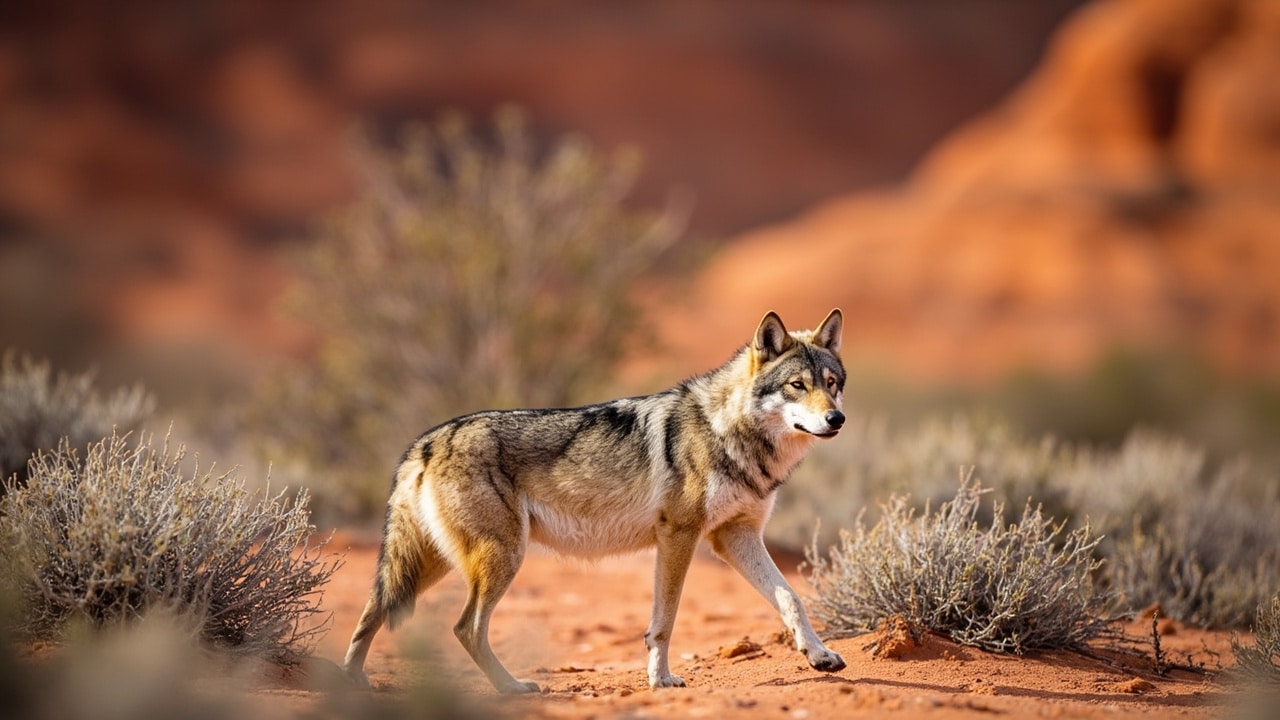
Colorado Reintroduction Marks Five Wild Years — The Wolves Comeback 2026 State Test
Outside the Mexican wolf zone, the wolves comeback 2026 in Colorado deserves its own accounting. Colorado voters approved Proposition 114 in November 2020, setting up what would become a center-of-gravity test for the wolves comeback 2026 in state-led recovery. The ballot question directed Colorado Parks and Wildlife to reintroduce gray wolves on designated land west of the Continental Divide. The first wolves, captured in Oregon, were released in December 2021. By spring of this year, marking another landmark in the wolves comeback 2026 timeline, the state’s reintroduced population had passed its fifth wild anniversary.
It had grown to roughly 50 individuals and produced enough pups to begin dispersing into neighboring counties and into Wyoming, where the animals quickly encountered a much more permissive hunting regime.
The Colorado milestone matters because it tested whether reintroductions could work in a political climate that has hardened against large carnivores in several other Western states. Ranchers in the reintroduction zone negotiated compensation agreements in advance. The state hired a wolf conflict coordinator. The legislature passed a non-lethal deterrence grant program. The first fatal cattle confirmations in 2023 triggered lawsuits from environmental groups and from ranching organizations in parallel. By 2026, none of those tensions had been resolved, but none had rolled back the program’s core recovery metrics either.
The state-level program looks less like a conflict-free success than like a managed, ongoing argument that has so far produced more wolves each year than the year before.
What makes Colorado unusual is that it was a ballot-driven, state-led reintroduction rather than a federal Endangered Species Act action. That legal difference shapes every downstream decision. CPW operates under a state management plan that, in the wolves comeback 2026 context, promises recovery of 200 wolves, distributed across at least three stable breeding pairs, by 2031. The plan allows lethal take of problem wolves under specific triggers. Federal protections apply to Mexican wolves but not to gray wolves in Colorado, which means gray wolves in the reintroduction zone are managed under state authority.
As the broader wolves comeback 2026 progresses, the Colorado experiment will be a key bellwether for whether state-led reintroductions can scale beyond a single state.
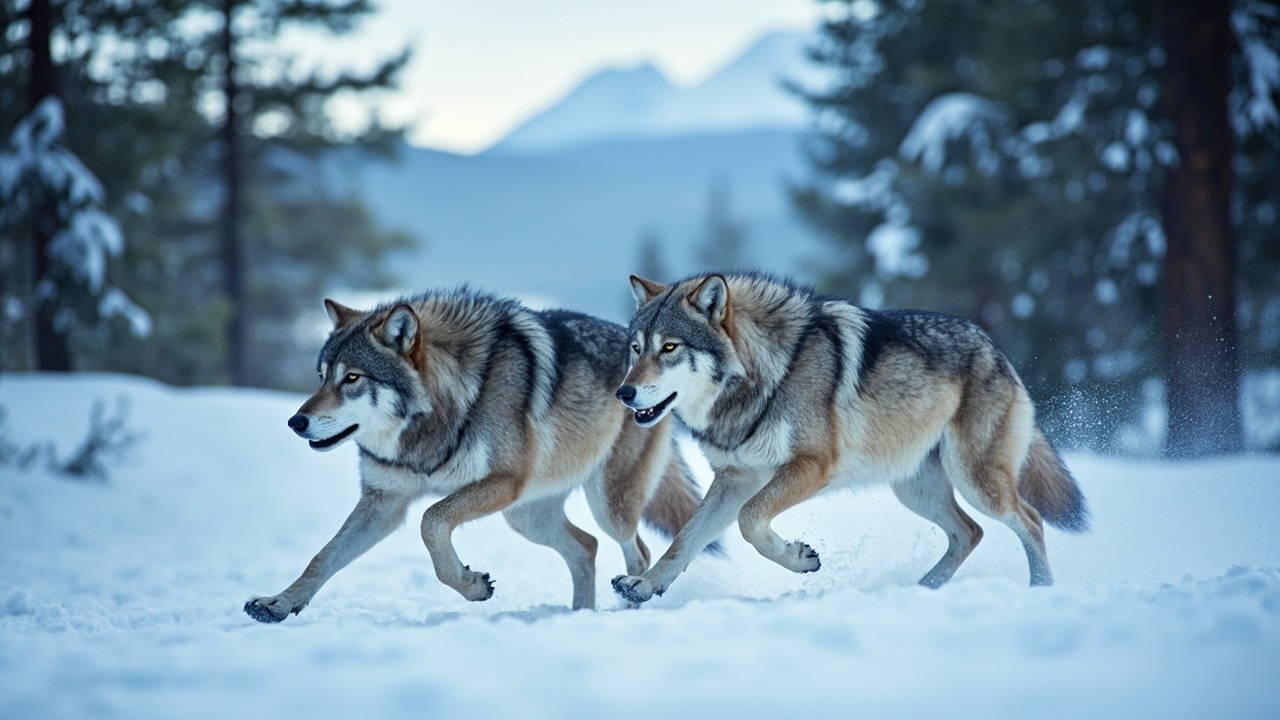
Yellowstone Continues Showing What Wolves Do
No coverage of the wolves comeback 2026 can skip Yellowstone, even though Yellowstone no longer drives the headline numbers the way it did between 1995 and 2003. Wolves were extirpated from the park by 1926. The 1995-1996 reintroduction of 41 Canadian wolves is one of the most studied wildlife projects in history. Its ripple effects on elk behavior, on riparian vegetation, and on coyote populations are now textbook ecology. The recovery data in Yellowstone is more about maintenance than about transformation. Packs persist, breeding continues, the population fluctuates between 80 and 120 wolves depending on disease outbreaks and out-of-park mortality.
What Yellowstone contributes is almost entirely long-term monitoring data. Decades of GPS collar records, kill-site investigations, and direct observation have made the park’s wolves the most photographed, most radio-tracked, and most written-about wolf population on Earth. Researchers using those records published new findings in 2024 and 2025 on pack fission dynamics, on hybridization pressure from nearby Idaho and Montana hunting zones, and on how multi-generational pack memory shapes hunting success on elk calves. The Yellowstone dataset is, in that sense, the rest of the world gets to learn from.
Yellowstone wolves also illustrate something the recovery narrative tends to underweight: the role of out-of-park mortality. Each year, several radio-collared Yellowstone wolves disperse beyond the park boundary and, depending on which state they enter, can be legally shot. From a regional perspective, the wolves comeback 2026 cycle shows that what happens in Wyoming, Idaho, and Montana keeps the Yellowstone meta-population from growing faster than it does. The same dynamic now threatens Colorado’s reintroduction. As wolves spread into more jurisdictions, the question shifts from whether wolves can recover to whether the legal frameworks around them will let them.
European Packs Fill Out the Global Picture — A Wolves Comeback 2026 Comparison
The wolves comeback 2026 cycle is not only a North American story. European wolf populations have grown steadily since the European Union’s 1992 Habitats Directive listed the gray wolf as a protected species. After near-extinction across much of continental Europe during the 1960s and 1970s, wolves returned to France in the 1990s, to Germany in the 2000s, and to Belgium, the Netherlands, and Denmark in the 2010s. Spain and Italy each host well-established breeding populations. Romania remains the demographic anchor of European wolves, with an estimated 4,600 individuals and legal sustainable harvest of around 2,800 per year.
European wolf research informs the broader recovery story in subtle ways. Studies on Scandinavian packs show how hybridization with domestic dogs, a problem worsening in many regions, can be tracked through the same kind of GPS collar data the U.S. recovery programs use. Studies on Italian and Iberian packs show how rapidly wolves can recolonize landscapes with moderate prey availability and low human density. That finding is broadly hopeful for the wolves comeback 2026 cycle in the U.S. West, where both prey populations and rural land use have shifted considerably in the last decade.
Where European wolves are running into trouble this year is precisely where North American wolves are starting to. France, Switzerland, and parts of Spain have rolled back some protections at the regional level in response to livestock losses. A 2025 European Commission working group report flagged growing fragmentation of wolf habitat. None of those European rollbacks have hit the core recovery, but they do provide a warning: legal protection is what got wolves back, and rolling back legal protection is the fastest way to undo it.
Why the Comeback Now Faces Its Hardest Test
Five years into the 2020s, the wolves comeback 2026 push is up against a category of problem it could defer during the population-growth phase. While a population is small and growing, every individual matters. Every illegal kill is a measurable setback. Once the population grows large enough to be politically inconvenient, recovery runs headlong into state-level politics. The current cycle is now in that second phase. Wyoming and Idaho have aggressively expanded hunting and trapping seasons. Wisconsin and Minnesota ran controversial, short, quota-free wolf hunts in 2021 and 2023. Washington State has wrestled with its own pack management decisions on the southern Cascade range.
The hardest political question is whether delistings should happen before populations have demonstrably stabilized. The U.S. Fish & Wildlife Service has, in several recent decisions, treated state-level population growth as evidence that federal Endangered Species Act protection is no longer required. Environmental groups have, in equal measure, treated that logic as a giveaway to hunting interests at exactly the moment when science suggests populations remain vulnerable. Both readings of the data are not entirely wrong, which is why the courts have been kept busy.
For now, the recovery continues despite the politics. The numbers are moving in the right direction. The next 24 months will likely bring at least one more ESA court decision, and likely a state-led hunting season decision or two. If the recovery holds, the wolves comeback 2026 will be remembered as the year, in the longer arc of carnivore conservation, when the argument shifted from can-wolves-survive to how-do-we-coexist-with-wolves. That is a better problem to have than the one biologists were staring at 30 years ago.
What This Year’s Recovery Numbers Mean Going Forward — Wolves Comeback 2026 Outlook
Look at the recovery against any other large carnivore comeback and it stands out. Grizzly bear recovery in the lower 48 has stalled in the Greater Yellowstone Ecosystem and the Northern Continental Divide Ecosystem for two decades. Mountain lion populations are stable but not expanding back into their historic Eastern range. Lynx recovery in the lower 48 has barely begun. The wolves comeback 2026 is, by comparison, a genuine success story. Its trajectory suggests the next decade will see wolves in more U.S. counties than at any time since 1926.
What it does not mean is that wolves are fully recovered. The genetic bottleneck in Mexican wolves remains unfixed. State-level hunting pressure is rising on several fronts. The recovery leaves unresolved the question of whether the current legal architecture can hold a recovered wolf population in place once political pressure for lethal control rises further. Conservation biologists tend to be conservative on those questions for exactly that reason.
For readers who care about the recovery beyond the headline numbers, the most useful next step is paying attention to local decisions. Gray wolf management is now a state-by-state patchwork in the U.S., with decisions made by wildlife commissions that most voters do not track closely. The wolves comeback 2026 will not be won by federal headlines. It will be won or lost in commission meetings in Cheyenne, Boise, Olympia, Madison, and Sacramento over the next three years.
Frequently Asked Questions
How many wild Mexican wolves live in the U.S. as of wolves comeback 2026?
The U.S. Fish & Wildlife Service counted 319 wild Mexican wolves in the United States as of February 2026. Of those, 176 lived in New Mexico and 143 in Arizona. The total represents a minimum, since the annual survey only counts animals confirmed by Interagency Field Team staff.
When did wolves comeback 2026 actually start accelerating?
The acceleration began in 2015, when Mexican wolf pup survival first crossed 50% and breeding pairs grew past 30. From 2015 forward, the U.S. Mexican wolf population has grown every year except 2018, when a mange outbreak briefly reduced pup survival. The current recovery cycle marks the 10th straight year of growth.
Are gray wolves still federally protected in the lower 48?
It depends on the region. Mexican gray wolves remain federally protected under the Endangered Species Act. Northern Rocky Mountain gray wolves have been delisted in Idaho, Montana, and Wyoming since 2020, with ongoing litigation. Western Great Lakes gray wolves have been subject to multiple delist-and-relist cycles. Wolves comeback 2026 decisions at the state level now carry significant weight in delisted regions.
What was the 100th cross-fostered Mexican wolf pup?
The cross-fostering program, started in 2014, moves captive-born pups into wild dens so they imprint on wild packs before being raised. The 100th cross-fostered pup was placed in 2024 in an Arizona den. The milestone matters because cross-fostered pups are more likely to survive and breed than pups raised entirely in captivity.
Where are wolves expanding most in 2026?
Outside the established recovery zones, the wolves comeback 2026 expansion is fastest in three areas. Western Colorado, from the 2021 reintroduction. Northwestern Washington State, from a dispersing Canadian pack. And southern Oregon, from the long-established Rogue pack lineages. European expansion is fastest in France, Germany, and Belgium.
What is the biggest threat to wolves comeback 2026?
State-level hunting pressure and illegal poaching are the two largest documented causes of wolf mortality in the lower 48. Recovery has continued despite both, partly because the growth rate remains positive. If either driver intensifies in delisted states, the wolves comeback 2026 numbers could stall.
How does GPS collar data help with wolves comeback 2026?
GPS collars transmit pack locations, kill sites, and dispersal routes on a near-daily basis. The wolves comeback 2026 dataset, especially for Mexican wolves, now covers 39% of the wild population at sub-kilometer resolution. That data is the basis for pack-territory maps, conflict hotspot mapping, and the next generation of genetic management plans.
Conclusion
The wolves comeback 2026 is the most concrete carnivore recovery story of this decade. The numbers are real: 319 wild Mexican wolves in the U.S., a 10th straight year of growth, the 100th cross-fostered pup now in the population, and GPS collar data covering 39% of those animals. The threats are also real, including state-level politics, illegal poaching, and a still-uncertain genetic future for the rarest gray wolf subspecies. Watch the local wildlife commissions, follow the next Endangered Species Act court decisions, and track state-level hunting season data. The recovery will be remembered for how that story resolves.
For everyone watching the wolves comeback 2026 from the outside, this is the year to start following the local commission agendas.