If you have ever wondered whether humanity still has the appetite for big, hard, expensive missions, 2026 has the answer. This is the most packed year of space exploration milestones 2026 has produced since the shuttle era flew.
Every story below is citable. We walked through the running 2026 in spaceflight timeline, pulled the cross-references, and rebuilt the events in plain English so you can read them in one sitting.
This is not a hype reel. It is the space exploration milestones 2026 you actually want on the record, with the dates and organisations that put them there.
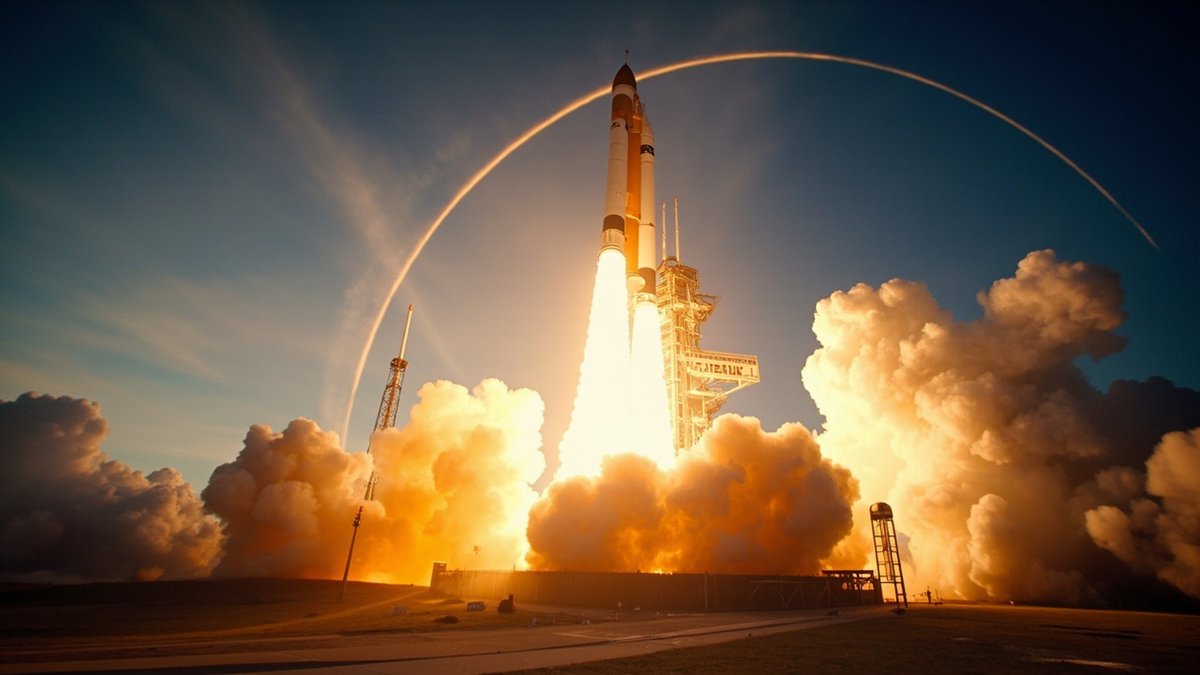
Table of Contents
- 1. Artemis II: The first crewed lunar flyby since Apollo
- 2. Pandora, SPARCS and BlackCAT ride a Falcon 9
- 3. PROBA-3, SMILE and the heliophysics push
- 4. Asteroid close-ups in space exploration milestones 2026
- 5. Mercury, Mars and the inner solar system push
- 6. Crewed spaceflight 2026: Crew-11, Crew-12, Mengzhou
- 7. Reusable rockets and the second-ever booster catch at sea
- 8. Telescopes that bookend space exploration milestones 2026
- FAQ
- Related Reading on ViralUntold
- Why this year of space exploration milestones 2026 matters
1. Artemis II: The first crewed lunar flyby since Apollo (April 1–11, 2026)
If you only remember one space exploration milestones 2026 story, make it this one. On April 1, a Space Launch System lifted four astronauts off pad 39B and sent them on a ten-day loop around the Moon.
The mission was crewed lunar flyby Artemis II. It is the first time humans have left low Earth orbit since Apollo 17 closed out its mission in December 1972. That is a 53-year gap.
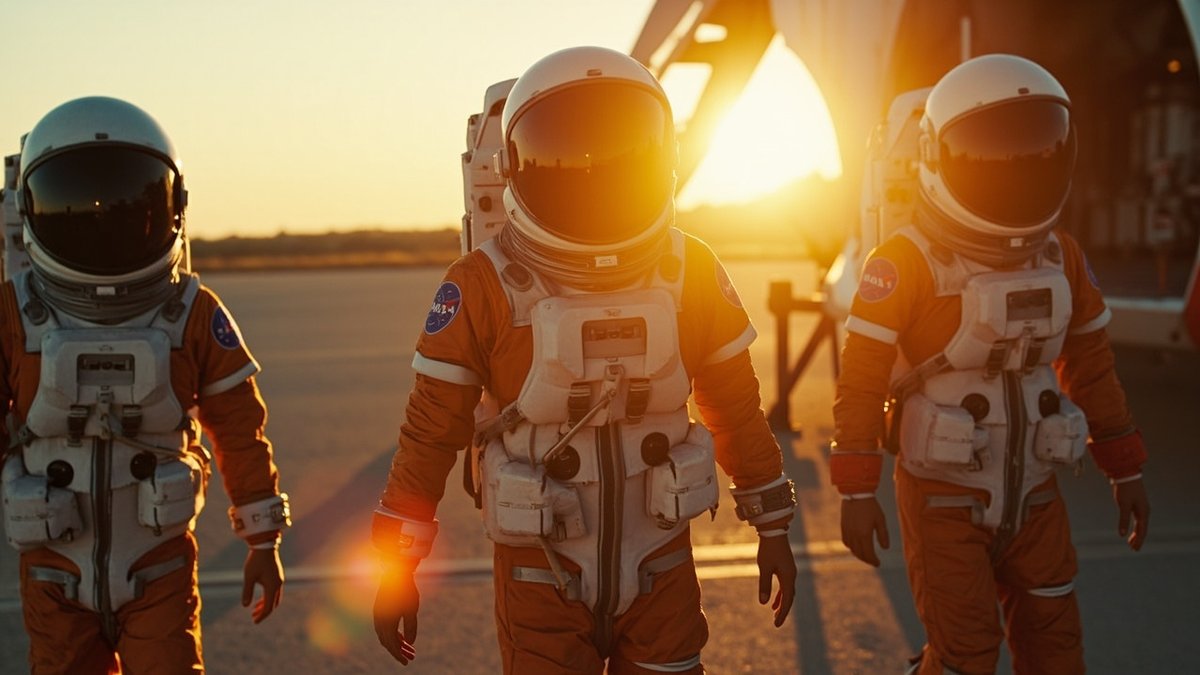
The crew was the most internationally diverse Apollo-program successor ever flown. Commander Reid Wiseman became the oldest person to travel beyond low Earth orbit and around the Moon.
Pilot Victor Glover became the first person of colour to leave LEO. Mission specialist Christina Koch became the first woman to fly beyond LEO.
Mission specialist Jeremy Hansen, of the Canadian Space Agency, became the first non-U.S. citizen on a lunar-class flight.
The flight did things only a deep-space mission can do. On April 6, the Orion capsule “Integrity” passed 252,756 miles (406,771 km) from Earth.
That beat Apollo 13’s standing record of 248,655 miles (400,171 km) by roughly 4,100 miles. It set a new human distance record for the books.
On April 11, Integrity dropped through the atmosphere and splashed down in the Pacific Ocean southwest of San Diego.
Why Artemis II is the headline among space exploration milestones 2026: it is the proving flight for Artemis IV, the mission currently slated to put boots back on the lunar surface. Everything from the heat shield to the life-support loop gets validated here.
Among space exploration milestones 2026, this one is also the most personal. The crew walked through the same launch-pad service-arm arms that every Apollo-era astronaut walked through, 53 years later.
You can read the verified Artemis II mission timeline at the Artemis II Wikipedia page and at NASA’s official Artemis II mission page.
2. Pandora, SPARCS and BlackCAT ride a Falcon 9 (January 11, 2026)
Before the lunar flyby stole the year, January set a smaller but useful pace. On January 11, a SpaceX Falcon 9 launched NASA’s Pandora small space telescope.
Pandora is designed to study exoplanet atmospheres by watching how starlight filters through them as the planets cross their host stars. The spacecraft will sit at the Earth-Sun L2 point, the same gravitational parking lot that JWST uses.
The same Falcon 9 flight carried two additional CubeSat-class space telescopes from NASA: SPARCS (the Star-Planet Activity Research CubeSat) and BlackCAT (a soft X-ray astronomy CubeSat).
Stacking three telescopes on one launcher is a cost move that has become routine in space exploration milestones 2026 astronomy programmes. It deserves more credit than the headlines usually give it.
3. PROBA-3, SMILE and the heliophysics push of 2026
Heliophysics — the study of the Sun and how its plasma drives space weather around Earth — had a bumpy start and a strong finish in 2026.
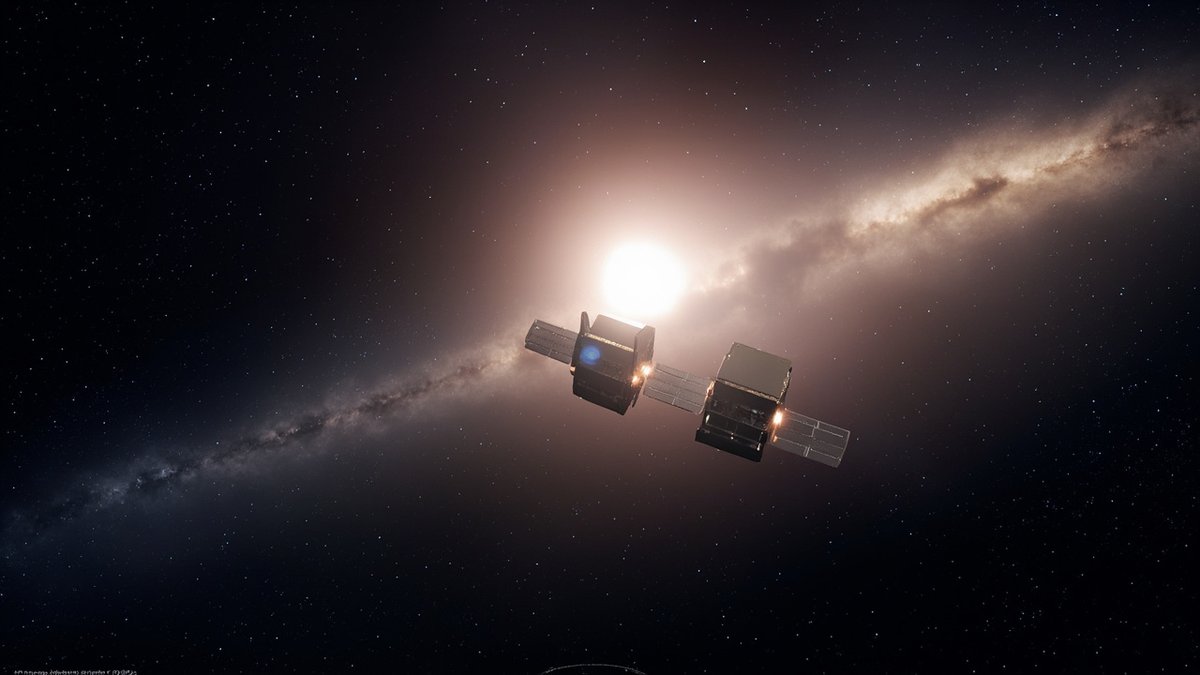
In February, ESA’s PROBA-3 mission suffered an anomaly. PROBA-3 uses a pair of spacecraft flying in formation so one can act as a coronagraph blocking the Sun’s disc for the other.
The anomaly led to loss of contact with one of the two satellites. Contact was re-established in March.
Once fully recovered, the mission will produce the longest artificial eclipses ever created on demand. PROBA-3 is one of the more original space exploration milestones 2026 heliophysics entries, and worth watching in the second half of the year.
SMILE will run its first joint ESA-CAS solar storm chase in early 2027.
On May 19, ESA and the Chinese Academy of Sciences launched SMILE — the Solar wind Magnetosphere Ionosphere Link Explorer. SMILE is a joint mission to map how solar wind plasma interacts with Earth’s magnetosphere in real time.
By June 20, SMILE had reached its science orbit. The mission is the second ESA-China collaboration at the heliophysics scale, and one of the quietly consequential space exploration milestones 2026 entries for understanding how solar storms knock out satellites and grid infrastructure.
A smaller note worth mentioning in the heliophysics chapter of space exploration milestones 2026: ESA plans to launch CubeSpec in mid-2026 to test a low-cost long-term spectroscopic monitor. NASA’s SunRISE mission — six CubeSats studying solar activity as a single interferometer — is also expected to launch mid-2026.
4. Asteroid close-ups in space exploration milestones 2026
July 2026 was the month astronomers finally got high-resolution imagery of two new solar system targets. Both rank high among the small-body space exploration milestones 2026 produced.
CNSA’s Tianwen-2 reached the near-Earth asteroid Kamoʻoalewa — a quasi-satellite of Earth that has been moving in a 1:1 resonance orbit with our planet for centuries — and began sample collection.
Kamoʻoalewa is roughly 40–100 metres across and is one of the most studied but least imaged quasi-satellites we have. Tianwen-2 is the second Chinese deep-space sample-return mission.
JAXA’s Hayabusa2, the same spacecraft that returned samples from asteroid Ryugu in 2020, flew by the near-Earth asteroid Torifune in July 2026 during its extended mission.
The flyby produced the first resolved images of Torifune ever captured. Hayabusa2 had already performed a flyby of asteroid 1998 KY26 in 2031 per a JAXA extended-mission profile. Torifune is the next target.
Together with NASA’s Psyche, which performed a 4,500 km Mars gravity assist on May 15 on its way to the metallic asteroid Psyche, July 2026 became the strongest single month for small-body science in recent memory.
These three missions are the kind of space exploration milestones 2026 that look modest in headlines but underpin the next decade of asteroid mining and planetary defence work.
If you only follow one asteroid story in the space exploration milestones 2026 calendar, follow Tianwen-2.
5. Mercury, Mars and the inner solar system push (space exploration milestones 2026 in the deep)
While the asteroid tourists dominated the news cycle, the deeper-space missions in 2026 quietly racked up milestones.
The joint ESA–JAXA BepiColombo mission — which launched in 2018 and has been using planetary flybys to spiral inward — is expected to enter Mercury orbit in late 2026.
Once in orbit, it will be only the second spacecraft ever to do so (after NASA’s MESSENGER) and the first ESA-led Mercury orbiter. BepiColombo is one of the slower-built but higher-stakes space exploration milestones 2026 entries, because Mercury is still poorly understood.
NASA’s twin ESCAPADE spacecraft — Escape and Plasma Acceleration and Dynamics Explorers — were originally manifested for launch in 2024 but were held over. In November 2026 they are expected to perform an Earth gravity assist that will line them up for a Mars transfer.
ESA’s Hera spacecraft, which launched in 2024 to follow up on NASA’s DART impact, is expected to reach the double asteroid Didymos in November 2026. Hera will survey the crater DART left, measure the binary system’s mass, and lay the groundwork for any future asteroid-deflection test.
In the Mars-moons category, JAXA plans to launch its Martian Moons eXploration (MMX) mission in November or December 2026. MMX will land on Phobos, collect samples, and return them to Earth — the first sample-return mission from a body beyond the Moon.
Closing out the year on December 24, ESA’s Solar Orbiter is scheduled to perform its fifth Venus flyby, which will tilt the spacecraft’s heliocentric orbit inclination from 17° to 24°. That gives the first extended out-of-ecliptic view of the Sun’s poles.
6. Crewed spaceflight 2026: Crew-11, Crew-12 and China’s Mengzhou
If you only follow the crewed story, 2026 opens badly, then opens the throttle.
On January 8, NASA astronaut Mike Fincke — a member of Crew-11 aboard the International Space Station — suffered a serious medical issue that included a roughly 20-minute loss of speech.
NASA called off an in-progress spacewalk and decided, for the first time in U.S. and ISS history, to bring the entire crew home early as a “controlled medical evacuation.”
Crew Dragon Endeavour splashed down off the California coast on January 15 with all four crew members safely aboard. It is the first time a U.S. crewed mission has been cut short for medical reasons.
Five weeks later, on February 13, NASA launched Crew-12 from the same Florida coast with three NASA astronauts, one ESA astronaut, and one Roscosmos cosmonaut aboard. The mission restored the station’s normal seven-person crew complement after the early Crew-11 return.
February 11 also saw China perform a successful in-flight abort test of its new Mengzhou crewed spacecraft. The test verified the launch escape system and the Long March 10A first stage’s ability to soft-land on water.
The full Mengzhou 1 uncrewed orbital test flight is planned for later in 2026.
7. Reusable rockets and the second-ever booster catch at sea (space exploration milestones 2026 for launch economics)
The rocket innovation track of 2026 opens with Ariane 64. On February 12, Arianespace launched 32 Amazon Leo satellites on the maiden flight of Ariane 64, the four-booster variant of Ariane 6.
It was the first successful orbital maiden flight of 2026 and a quick turnaround from Ariane 6’s own debut in 2024.
SpaceX continued Starship testing with Flight 12 — a partially successful suborbital flight in May. Publicly released telemetry shows all 33 engines on the booster ignited and the upper stage reached its planned peak altitude.
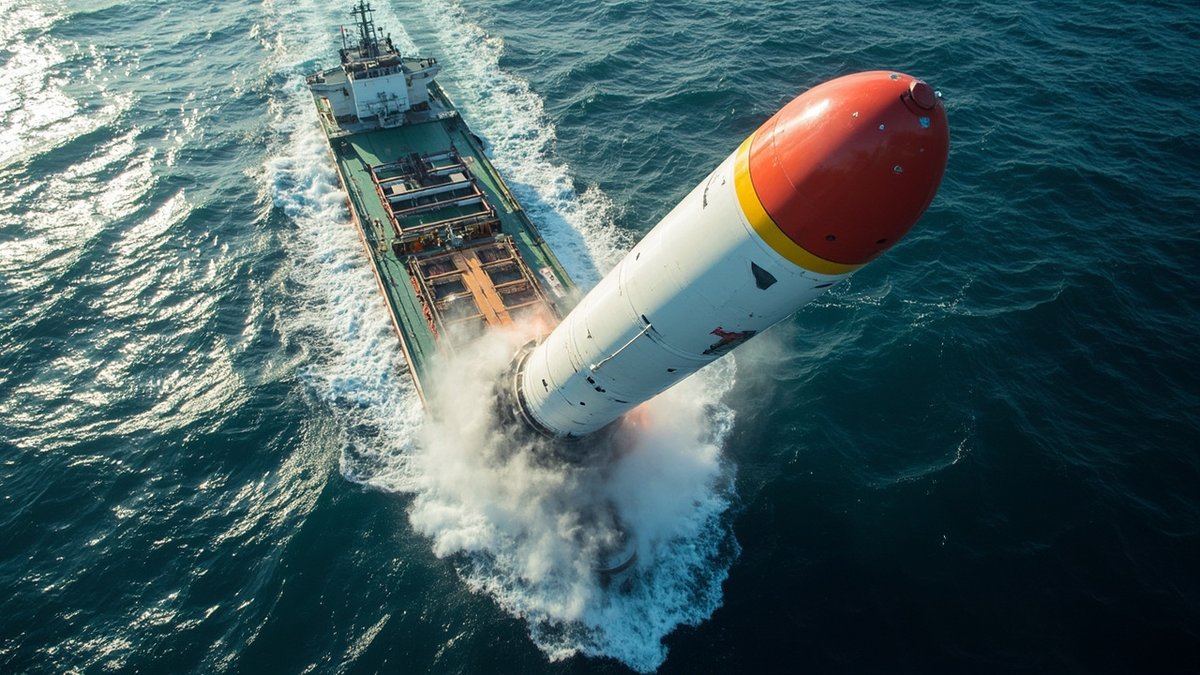
Then on July 10, China became the second nation ever to recover a booster after orbital flight. A Long March 10B first stage descended through the atmosphere, oriented vertically, and landed on a netted structure mounted on a Chinese sea-recovery ship.
The recovery happened on the rocket’s maiden flight, which makes the achievement especially notable. This is one of the genuinely surprising space exploration milestones 2026 for anyone who tracks launch economics.
ESA also plans Themis reusable demonstrator test flights in early 2026. Themis is the precursor to the Prometheus engine ESA expects to fly operationally before 2030.
8. Telescopes that bookend space exploration milestones 2026
The single most consequential category for civilian readers is the telescope launches that will shape astronomy for the next decade. These belong in any honest list of space exploration milestones 2026.
The biggest is NASA’s Nancy Grace Roman Space Telescope, scheduled to launch in September. Roman is an infrared survey telescope with a field of view 100 times wider than Hubble.
It will survey the sky for dark energy, exoplanet demographics, and microlensing events.
Those are three science programmes Hubble could never have run at scale. Roman’s primary mirror is 2.4 metres, the same diameter as Hubble’s.
The cameras are modern and the survey cadence is what changes the science in space exploration milestones 2026. Mission details at NASA’s Roman Space Telescope program page.
China plans to launch Xuntian, also called the Chinese Survey Space Telescope, late in 2026 or 2027. Xuntian will co-orbit with the Tiangong space station and can dock for service and instrument upgrades.
That is a model the Hubble Space Telescope could have used in the 1990s and the James Webb Space Telescope will never use. Xuntian’s field of view is roughly 350 times Hubble’s.
In August, NASA plans to launch Aspera, a small ultraviolet telescope designed to map hot gas in the circumgalactic and intergalactic medium of nearby galaxies.
In December, Taiwan plans to launch its first space telescope, the Gamma-ray Transients Monitor (GTM), as a secondary payload on Formosat-8B.
For lunar science, China’s Chang’e 7 mission — scheduled for late 2026 — will explore the lunar south pole. It is the most instrumented Chinese lunar mission to date: an orbiter, a relay satellite, a lander, a rover, and a mini-flying probe.
Two NASA Commercial Lunar Payload Services missions are also scheduled for 2026. IM-3, run with Intuitive Machines, will land at Reiner Gamma, the brightest lunar swirl.
Blue Ghost Mission 2, run with Firefly Aerospace, will land on the Moon’s far side and deliver ESA’s Lunar Pathfinder communications satellite to lunar orbit.
FAQ: 2026 space exploration milestones
What is the biggest space exploration milestones 2026 entry?
Most observers rank the Artemis II lunar flyby (April 1–11) as the biggest. It is the first crewed flight beyond low Earth orbit in 53 years, and it broke Apollo 13’s distance record by roughly 4,100 miles.
For long-tail impact, the Roman Space Telescope launch in September will probably produce more science papers per year than any single 2026 mission.
Did anything fail in space 2026?
Yes. The Indian PSLV-C62 rocket carrying Spain’s KID re-entry capsule failed in flight on January 12. KID separated from the falling launcher and managed to transmit telemetry, becoming the lone survivor of 2026’s first launch failure.
ESA’s PROBA-3 lost contact with one of its two spacecraft in February before recovering in March. Hisdesat’s Spainsat NG II was hit by a “space particle” in January on its way to geostationary orbit and suffered non-recoverable damage.
Why is China’s Long March 10B booster catch significant in space exploration milestones 2026?
It was the second-ever successful sea recovery of an orbital booster and the first performed on a rocket’s maiden flight.
The Chinese crewed lunar programme depends on getting the same engine-cycle and recovery procedure right at scale, so any successful catch matters.
When will BepiColombo reach Mercury?
Late 2026. The mission has been using a sequence of planetary flybys since 2018 to spiral inward.
Once in Mercury orbit it will be the first ESA-led Mercury orbiter and only the second spacecraft ever to operate there long-term, after NASA’s MESSENGER.
Is Roman Space Telescope bigger than Hubble?
The mirror diameter is the same — 2.4 metres. What differs is the field of view, which is about 100 times wider.
That lets Roman survey huge patches of sky in a single exposure, which is what unlocks dark energy and exoplanet statistical work.
Will any country send humans to Mars in 2026?
No. China’s Mengzhou spacecraft is in uncrewed test mode.
The earliest realistic crewed Mars window after 2026 is the late 2030s, and SpaceX has publicly pushed its Mars ambitions back five to seven years as of February 9, 2026.
What space telescope launches are planned for late 2026?
Roman Space Telescope in September. Xuntian in late 2026 or 2027. Taiwan’s GTM in December as a secondary payload.
Plus smaller pathfinders like Aspera and CubeSpec. These round out the space exploration milestones 2026 calendar and the space exploration milestones 2026 story overall.
Why space exploration milestones 2026 are the hinge year
When you stack the Artemis II lunar flyby, the Long March 10B sea catch, the Tianwen-2 asteroid arrival, the Roman and Xuntian telescope launches, and the BepiColombo Mercury orbit insertion into one calendar, you stop thinking about 2026 as a year and start thinking about it as a hinge.
The post-Apollo gap is technically still open — no humans have walked on another world since 1972. But Artemis II closes the human-distance gap, the Artemis II splashdown closes the operational gap, and the rocket-innovation track closes the cost-per-kilogram gap in ways that did not exist 12 months ago.
For ordinary readers, the practical takeaway is short.
The Roman Space Telescope will start sending data in 2027. Xuntian will follow. Artemis IV will attempt the lunar surface.
BepiColombo will start sending Mercury data. Read more about the broader 2026 spaceflight story at the Wikipedia 2026 in spaceflight entry.
By the time we run the 2030 roundup of space exploration milestones, the most-cited line in this article will probably be the Artemis II date — April 1, 2026.
Bookmark this page. We will update it as the late-2026 launches (Hera, ESCAPADE, MMX, Solar Orbiter) report in.
ViralUntold
Editor at ViralUntold. Filing dispatches on the stories behind the headlines.


More from Science
Other stories in the Science beat, filed continuously by the ViralUntold desk.