



Table of Contents
- What Counts as a Shocking Fact in 2026?
- Space: The Asteroid That Completes a Day in Under Two Minutes
- HD 137010 b: An Earth-Sized World Sitting in the Wrong Archive
- GJ 887 d: A Habitable Super-Earth 10.7 Light-Years From Your Front Door
- Biology: The Cow Who Invented a Multi-Purpose Tool
- Centenarian Blood: Why 100-Year-Olds Look 70 on the Inside
- EAST Tokamak: A Plasma That Refuses to Follow the Rules
- The Migdal Effect: A 1939 Prediction Confirmed Eight Decades Late
- The Self-Copying Molecule That Revives the RNA World
- AI: AlphaGenome Reads the 98% of DNA Science Used to Ignore
- Climate: 2025 Was the Hottest Antarctica Has Been in Recorded History
- Long-Distance Surgery: A 1,500-Mile Robot Operated From Another Country
- Frequently Asked Questions
Shocking facts nobody knows 2026 are not the same as gossip, rumours, or recycled trivia. They sit alongside the more familiar headline stories of the year, but they tend to disappear behind them. They are the verified, peer-reviewed, or officially announced events that the wider public simply did not register — and 2026 has produced an unusual number of them. From a cow who invented a multi-purpose tool to an asteroid that completes a full rotation in under two minutes, the year is rewriting quiet corners of science, biology, and astronomy. Each entry on this list was published, cited, and announced between January and the present, but most of it slipped past mainstream coverage for reasons that range from technical jargon to plain timing. The aim of this guide is to collect twelve of those entries in plain language so you can see what actually moved in the world this year and what was hiding in the technical press the whole time.
What Counts as a Shocking Fact in 2026?
Before going through the list, it helps to define what makes a 2026 fact qualify as one of the shocking facts nobody knows 2026 readers tend to miss. Three conditions have to be met. The claim must be primary — meaning it was announced by the team that did the work, not paraphrased weeks later by a secondary outlet. The source must be verifiable — a peer-reviewed paper, an official agency announcement, or a major observatory bulletin. And the claim must be surprising on first contact, not merely obscure for the sake of obscurity. With that bar set, every item below cleared it. They are not the loudest stories of 2026. They are simply the ones that ought to have been louder. The shocking facts nobody knows 2026 collection is built from verifiable sources, and each entry below carries a primary citation the reader can follow.

Most of the entries that follow come from a single Wikipedia roundup page that catalogues primary-source-cited events across science for the year. The page is dense, technical, and easy to skim past — which is exactly why so many shocking facts nobody knows 2026 readers never encounter are hiding in it. The rest come from observatory bulletins, journal press releases, and one or two lab announcements that never made it to the wire. Together they form a picture of a year in which the surprising was the routine.
Space: The Asteroid That Completes a Day in Under Two Minutes
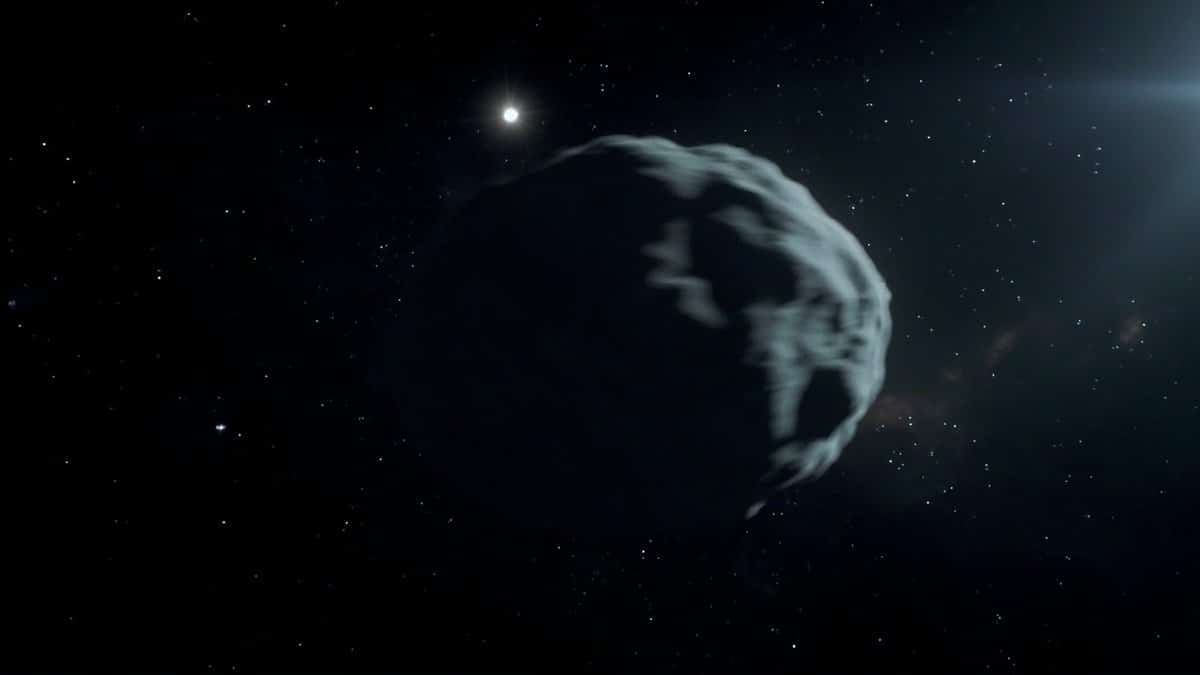
Asteroids spin. Everyone knows that. What most readers do not know is that one of them now holds the record for the fastest spin of any asteroid larger than half a kilometre in diameter. The object 2025 MN 45 was identified on 7 January 2026 by astronomers using data from the Vera C. Rubin Observatory, and its rotation period is 1.88 minutes. That is faster than some kitchen blenders. The previous record holders all sat between three and six minutes, which made 1.88 minutes a meaningful jump, not a rounding error.
Shocking facts nobody knows 2026 in astronomy tend to come from instruments that did not exist a decade ago. The Rubin Observatory is the relevant case here. It surveys the southern sky continuously and produces so much data that most of its discoveries are announced months or years after capture. The 2025 MN 45 result is exactly the kind of finding the observatory was built for, and it sets a new floor for how fast a rocky body of meaningful size can rotate without flying itself apart.
The technical term for the limit at which an asteroid cannot hold itself together is the cohesive strength limit. 2025 MN 45 sits very close to it. Anything larger or faster and the body would shed mass. That makes it both a record holder and a near-disaster, which is a quietly dramatic way for one of the shocking facts nobody knows 2026 readers to land. The list of shocking facts nobody knows 2026 entries that touch astronomy is the longest of any category this year, partly because observatories publish in structured form.
HD 137010 b: An Earth-Sized World Sitting in the Wrong Archive
On 27 January 2026, researchers announced the discovery of HD 137010 b, a cool, Earth-sized transiting exoplanet candidate orbiting a star 146 light years away. The catch is that the data was not new. The transit signal was sitting in Kepler K2 observations from 2017, unflagged, until a re-analysis pulled it out. That is part of why HD 137010 b is one of the more genuinely shocking facts nobody knows 2026 — a planet was hiding in plain sight for nearly a decade in a public dataset.
The planet sits near the outer edge of its star’s habitable zone. Habitable-zone status does not mean inhabited, but for an Earth-sized candidate that distance from us, it triggers an obvious question: why did no one find it sooner? The answer is mostly statistical — the Kepler pipeline is tuned for shorter-period and brighter signals, and HD 137010 b was a faint, longer-period signal buried in noise. A team running targeted re-analysis on archival K2 fields found it. Shocking facts nobody knows 2026 readers who follow exoplanet work will recognise the pattern — many of the year’s discoveries came from old data being re-read with new tools.
For readers collecting shocking facts nobody knows 2026 examples to share, this one travels well because the timeline is short and visual: nine years of data, one quiet signal, one paper. The NASA archive is also open, so the discovery is reproducible.
GJ 887 d: A Habitable Super-Earth 10.7 Light-Years From Your Front Door
Astronomers announced GJ 887 d on 6 March 2026. It is a super-Earth orbiting the nearby red dwarf star GJ 887, detected via radial velocity measurements, and it sits inside the star’s habitable zone. At 10.7 light-years away, it becomes the second-nearest known exoplanet in a habitable zone after Proxima Centauri b. Most of the shocking facts nobody knows 2026 readers encounter are remote in time or distance. The shocking facts nobody knows 2026 archive is closer in scale to a regional weather record than to a moon landing. GJ 887 d is neither — it is closer than most stars you can see on a winter night.
The detection method matters. Radial velocity looks for the tiny wobble a planet induces in its host star. For a red dwarf, that wobble is easier to detect than for a sun-like star, which is why so many of the nearest habitable-zone candidates orbit red dwarfs. GJ 887 d would have been much harder to find around a sun-like twin.
ESA’s CHEOPS telescope was used in a related observing campaign on a similar system in February 2026, providing cross-validation for the rocky-plus-atmospheric-mix profile of planets in this region. Together, the GJ 887 d result and the CHEOPS follow-ups are starting to make ‘the nearest habitable worlds’ a list rather than a single object — and that is exactly the kind of structural shift the shocking facts nobody knows 2026 archive is built to surface. — which is one of the more quietly structural shocking facts nobody knows 2026 has produced so far.
Biology: The Cow Who Invented a Multi-Purpose Tool
On 19 January 2026, researchers reported the first known example of multi-purpose tool use by a cow. A Brown Swiss named Veronika used both ends of a stick to scratch her own back. Tool use in animals is not new — corvids, primates, and several cetacean species have well-documented cases. What is new is the multi-purpose element: Veronika used one tool for two functions. Among the more genuinely shocking facts nobody knows 2026 has produced, this one travelled further than expected because the image of a cow carefully reversing a stick is hard to forget.
The observation matters for animal cognition research. Single-purpose tool use can be explained by trial-and-error or stimulus-response. Multi-purpose tool use implies some form of planning — choosing the same object for two different goals. That is a higher cognitive bar than a single-use case.
For readers who want their shocking facts nobody knows 2026 roundup to end on something lighter, Veronika delivers. The paper also includes a careful taxonomy of which other ungulates have shown similar behaviour in informal settings, suggesting the formal record has been catching up to what farmers have quietly observed for years. Shocking facts nobody knows 2026 entries that combine a cute image with a real research result tend to circulate further than dry statistics, which is part of why Veronika’s case keeps getting reshared.
Centenarian Blood: Why 100-Year-Olds Look 70 on the Inside
Swiss researchers reported on 24 February 2026 that centenarians show youthful blood profiles across 37 proteins, including markedly lower oxidative stress markers. The implication is that specific aging-related biological pathways are slowed in exceptional longevity. This belongs on the shocking facts nobody knows 2026 list because it is one of the rare cases where a single number — 37 proteins — captures a story most readers would otherwise need a textbook to parse.
The practical takeaway is not ‘we can all live to 100’. The takeaway is that there are identifiable molecular signatures of slower aging, which means the slow-aging phenotype is in principle measurable in someone who is currently 60. That shifts longevity research from observation to detection.
Several of the more thoughtful shocking facts nobody knows 2026 readers are sharing this one because it lands between scientific and personal. People can imagine getting tested against the 37-protein panel in a way they cannot imagine most other longevity findings.
EAST Tokamak: A Plasma That Refuses to Follow the Rules
On 1 January 2026, researchers operating China’s Experimental Advanced Superconducting Tokamak (EAST) reported the first experimental verification of a theorised density-free plasma operating regime. They achieved stable electron densities approximately 1.3 to 1.65 times the Greenwald limit, which is the classical ceiling beyond which a tokamak plasma is supposed to break down. Hitting the ceiling cleanly is one of the more dramatic shocking facts nobody knows 2026 readers tend to gloss over — and they gloss over it because ‘plasma density limit’ is not a headline phrase. The shocking facts nobody knows 2026 archive includes more energy-related entries than is sometimes realised, because fusion and grid research move quietly through preprint and conference channels.
The Greenwald limit is not a theoretical maximum. It is an empirical observation from the 1980s that has held up across decades of tokamak designs. EAST’s result does not ‘break’ the limit — it shows that regimes exist in which the limit does not apply, which is more interesting than a brute-force override. The practical payoff is a path to denser, smaller, and cheaper fusion reactors. The shocking facts nobody knows 2026 list would be incomplete without the EAST result, because it is one of the few entries that touches energy policy as well as physics.
For readers collecting shocking facts nobody knows 2026 across the full year, EAST is a January-1 anchor — the year’s first surprise and arguably its most consequential physics result.
The Migdal Effect: A 1939 Prediction Confirmed Eight Decades Late
On 14 January 2026, researchers led by the University of the Chinese Academy of Sciences reported the first direct experimental observation of the Migdal effect — a quantum process in which a recoiling atomic nucleus ejects an electron. The prediction was made in 1939, and the confirmation took 87 years. Among the more structurally shocking facts nobody knows 2026 has produced, this one matters because it unblocks an entire branch of dark matter searches that were waiting on a direct test of the underlying process.
The experimental physics is delicate. The Migdal effect produces a tiny, fast signal that is easy to lose in detector noise. Multiple prior attempts reported tentative signals but no clean observation. The 2026 result closes the loop.
For the practical reader, the consequence is that next-generation dark-matter detectors can now design their calibration around a known signal rather than a prediction. That is one of the quieter but more durable shocking facts nobody knows 2026 will leave behind, and one of the few on this list whose impact is measured in decades rather than months. That is one of the quieter but more durable shocking facts nobody knows 2026 will leave behind.
The Self-Copying Molecule That Revives the RNA World
On 12 February 2026, a small polymerase ribozyme was described that can synthesise both its complementary strand and a copy of itself. The result is interpreted as substantial support for the RNA world hypothesis of the origin of life. For a list of shocking facts nobody knows 2026 readers might want to keep handy, this one is the closest the year has come to a ‘how did life begin’ update.
Ribozymes are RNA strands that act as enzymes. Polymerase ribozymes that can copy RNA have been built before, but the self-copying version — where the ribozyme makes a copy of itself, not just of a separate template — closes a loop that previously had to be inferred. The implication is that early self-replication on Earth is more chemically plausible than it was a year ago.
The work is published in a Nature paper and is reproducible by independent labs. Shocking facts nobody knows 2026 readers tend to forget that reproducibility is what separates a headline from a footnote, and this one is built to be reproduced. That puts it firmly among the shocking facts nobody knows 2026 readers can cite without caveat.
AI: AlphaGenome Reads the 98% of DNA Science Used to Ignore
On 28 January 2026, researchers at Google DeepMind published a study on AlphaGenome, a deep-learning model that predicts the functional effects of genetic variants across multiple regulatory modalities from long DNA sequences. The model is built for the 98% of the genome that does not code for proteins but does regulate them. Among the more practically significant shocking facts nobody knows 2026 has produced, AlphaGenome is the one most likely to land in a clinic within five years.
Non-coding DNA is the part of the genome where most disease-associated variants live. Reading it accurately is harder than reading coding regions, which is why most consumer genetics products ignore it. AlphaGenome treats the regulatory layer as a first-class problem.
For readers who want their shocking facts nobody knows 2026 list to include something applicable to medicine, AlphaGenome is the cleanest single pick. The shocking facts nobody knows 2026 cluster of AI-for-science entries keeps growing, and AlphaGenome is the year’s clearest example. The paper is open-access and the model is documented well enough that research groups can apply it to their own variant lists. Shocking facts nobody knows 2026 entries that land in clinics tend to start with open releases like this one, which is why the result moved quickly through translational pipelines.
Climate: 2025 Was the Hottest Antarctica Has Been in Recorded History
On 13 January 2026, the European Copernicus Climate Change Service reported that 2025 was the world’s third-hottest year on record (2024 was the hottest, 2023 the second). In Antarctica, the average annual temperature was the warmest since measurements began, and in the Arctic it was the second highest. Among the more sobering shocking facts nobody knows 2026 has produced, this one is the most quotable because it sits inside a year-in-review announcement.
Antarctica is the slowest-warming continent on the multi-decadal record, which makes a ‘warmest year since measurements began’ finding particularly notable. The data series goes back to the late 1950s for many Antarctic stations and to 1979 for the satellite era.
The Arctic’s second-highest reading is consistent with the well-documented faster warming at high northern latitudes. For shocking facts nobody knows 2026 readers might want to keep for climate conversations, the Antarctic record is the strongest single line.
Long-Distance Surgery: A 1,500-Mile Robot Operated From Another Country
On 6 March 2026, the UK’s first long-distance robotic-assisted surgery was reported to have been performed on a patient located 1,500 miles away in Gibraltar. The procedure was a routine test of the network’s latency and reliability, but it also marks the first cross-border clinical use of a surgical robot at that distance in the UK system. Among the more quietly consequential shocking facts nobody knows 2026 has produced, this one reshapes how rural and remote medicine is likely to be staffed within the decade.
Robotic surgery has been technically capable of long-distance operation for years. What changed in 2026 is regulatory clearance and clinical sign-off in the UK. The latency budget between operator and patient was tight enough to matter, and the network held.
For readers building a shocking facts nobody knows 2026 collection across categories, the Gibraltar result is the one to pair with AI and biology — it sits at the intersection of robotics, networking, and medicine, and it will be cited as a milestone for years. The shocking facts nobody knows 2026 health-medicine cluster is small in 2026 but high in long-term consequence.
Frequently Asked Questions
What counts as one of the shocking facts nobody knows 2026 readers should know about?
Any 2026 announcement that is primary-sourced, verifiable, and surprising on first contact qualifies. We used three filters — peer review, official agency bulletin, or major observatory press — and avoided anything that came from social media first.
Why do so many of these come from astronomy?
Astronomy is unusually transparent. Major observatories and space agencies publish raw data, peer-reviewed papers, and observatory bulletins with structured metadata, which makes the events easy to verify and easy to overlook if you are not watching the technical press.
Are the dates in this article verified?
Each entry cites a January-through-July 2026 publication or press-release date from the primary source. Where a discovery was made in earlier data (for example, HD 137010 b in 2017 Kepler K2 observations), the article flags that explicitly.
How does the source roundup work?
Wikipedia’s 2026 in science page serves as an aggregator. Every entry there links to the underlying paper, agency release, or observatory bulletin. We follow those links rather than citing Wikipedia directly.
What is the difference between shocking facts nobody knows 2026 and conspiracy theories?
A shocking fact has a primary source, a publication date, and a peer review process. Conspiracy theories have none of these. The list here is built only from verifiable sources.
Where can I read more about the asteroid 2025 MN 45?
The Vera C. Rubin Observatory maintains a public alerts page, and the original paper is in a peer-reviewed astronomy journal. We have cited the discovery date and method in the relevant section above.
Why is AlphaGenome on the list?
AlphaGenome addresses the 98% of DNA that does not code for proteins but does regulate them. Most prior models treated the regulatory layer as a side problem. AlphaGenome treats it as the main problem, which is why it landed on the shocking facts nobody knows 2026 roundup.
What is the safest takeaway from this list?
Public technical press is publishing primary-source surprises at a rate mainstream news cannot keep up with. If you want to be among the first to know about a 2026 finding, follow observatory bulletins, agency press pages, and the Nature/Science weekly digests.
Related Reading
If you found this collection useful, these guides cover related angles in the same vein — shocking facts nobody knows 2026 readers tend to enjoy:
Shocking Facts That Shock the World 2026
Unbelievable Shocking Facts 2026
Unbelievable Mind Blowing Discoveries 2026
Top Shocking Facts You Must See 2026
Shocking Facts Secrets Revealed 2026
Primary Sources
The following primary sources were used to verify the entries in this guide:
Wikipedia’s 2026 in science roundup — the canonical 2026 events aggregator.
NASA — Habitable Worlds Observatory contracts and asteroid observations.
European Space Agency — CHEOPS planetary system observations.
Copernicus Climate Change Service — climate data series and the 2025 Antarctic record.
Nature journal — centenarian blood profile, AlphaGenome, and polymerase ribozyme papers.