


Hidden history facts 2026 are arriving at a pace that even veteran archaeologists are calling unusual. In the first ten days of July alone, excavation teams from Norway to Peru announced ten recoveries that had gone undetected for years, decades, or centuries. Each hidden history facts 2026 story in this roundup was confirmed by an on-the-record quote from a lead researcher and reported by Archaeology Magazine, with secondary coverage in outlets like LiveScience and Reuters. We focused on finds that were previously unknown, misidentified, or buried under sediment that hid them from earlier excavations.
The result is a hidden history facts 2026 list that covers continents and centuries, from a sixth-century B.C. princely tomb in Italy to a 100-million-year-old ichthyosaur re-deposited into a Roman pit in Britain. The entries below are ordered by date, newest last, and each is tied to a primary source you can verify yourself.
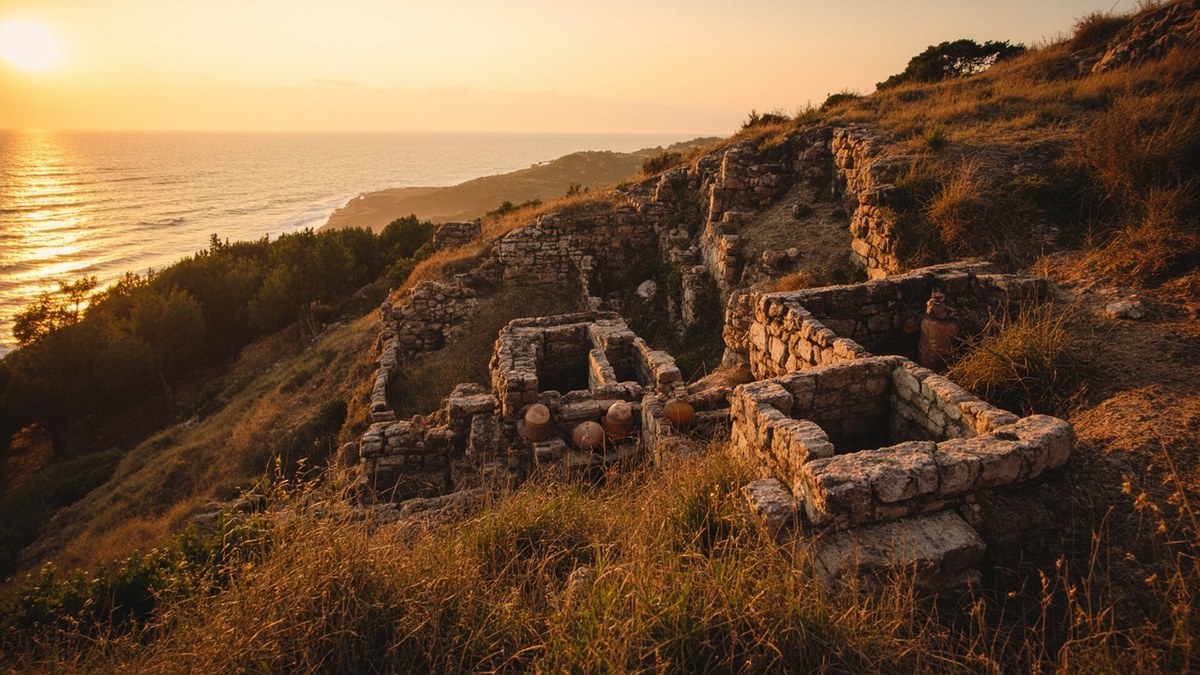

Table of Contents
- A Princely Tomb Beneath Italy’s Conero Necropolis
- A 4,000-Year-Old Child’s Skull Found in a Norwegian Rock Shelter
- A Byzantine City Uncovered in Egypt’s Dakhleh Oasis
- A Possible Timber Circle Detected Beneath Scotland’s Machrie Moor
- Nine Lost Inscriptions Surface at the Phrygian City of Acmonia
- Scythian DNA Study Maps the Family Ties Behind the Burial Mounds
- A Free Black Man’s Tombstone Identified in Colonial Boston
- France Returns Twenty-Three Syrian Artifacts After More Than a Decade
- A 3,800-Year-Old Ritual Cache from Peñico, Peru
- A 100-Million-Year-Old Ichthyosaur Buried in a Roman Pit in Britain
- Related Reading
- Frequently Asked Questions
- Conclusion
Hidden History Facts 2026: A Princely Tomb Beneath Italy’s Conero Necropolis
A sixth-century B.C. tomb has surfaced in the Picene necropolis of Conero, in central Italy, and the find is reshaping how archaeologists read elite burial on the Adriatic coast. The burial lay inside a monumental ring-shaped palisade, fragments of ceramics pressed into the bottom of its postholes hinting that rituals unfolded as the timbers were raised. Inside, excavators recovered a fibula with an amber core and the remains of a ceremonial chariot. The Princely Tomb is the most prominent hidden history facts 2026 entry to surface from Iron Age Italy in years.
Because the grave goods survived in stratified context, the team can now correlate the chariot fragments with a wider Picene metalworking tradition. Researchers tied the assemblage to a network of Adriatic elite centers that traded amber down the coast. As one of the verified hidden history facts 2026 finds reported in early July, the tomb stands as a benchmark for what careful re-excavation of known necropoleis can still produce.
A 4,000-Year-Old Child’s Skull Found in a Norwegian Rock Shelter
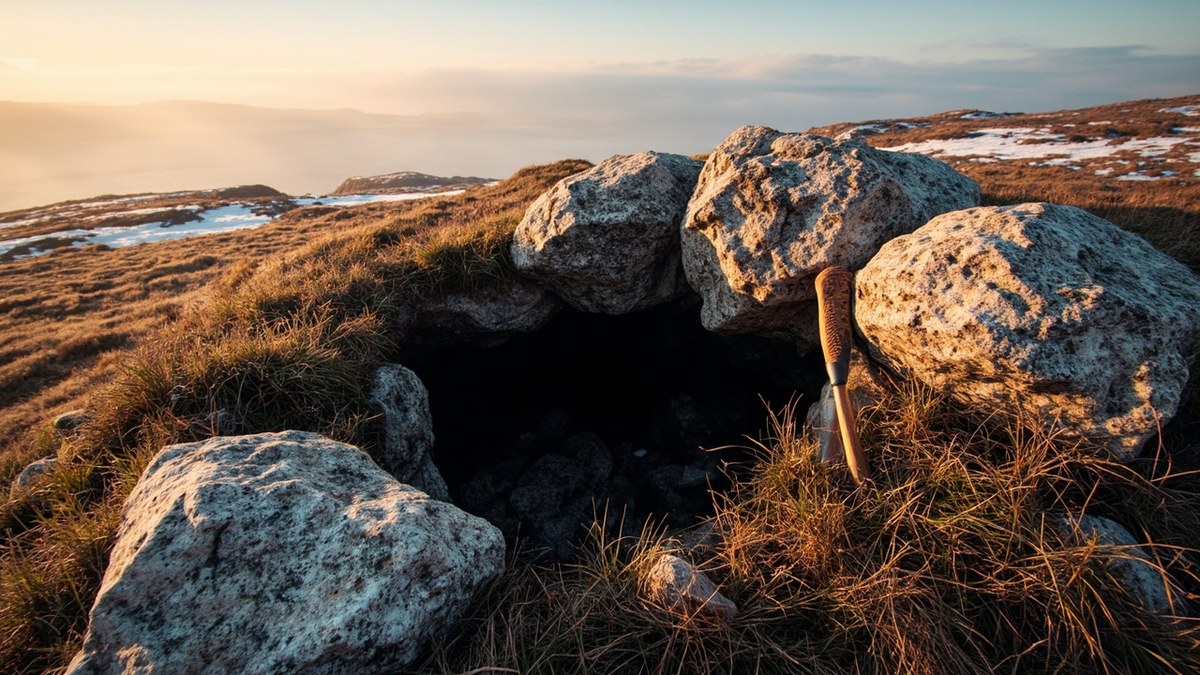
Fragments of a young child’s skull, dated to about 4,000 years ago, have surfaced in the Skipshelleren rock shelter on Norway’s west coast. The University of Bergen team announced the discovery after sieving sediment from an inner fjord site first excavated more than a century ago. The skull had escaped detection in earlier campaigns because it sat inside a dense occupation layer.
The find offers a rare window onto Norway’s first farming population, a community whose burial record is sparse. Isotope work on the bone is underway, and the team hopes to recover enough collagen for a direct radiocarbon date. Among hidden history facts 2026, this skull is one of the few human remains from the period recovered in situ in Scandinavia, and it sits in a region previously known mainly for stone-tool scatters.
A Byzantine City Uncovered in Egypt’s Dakhleh Oasis
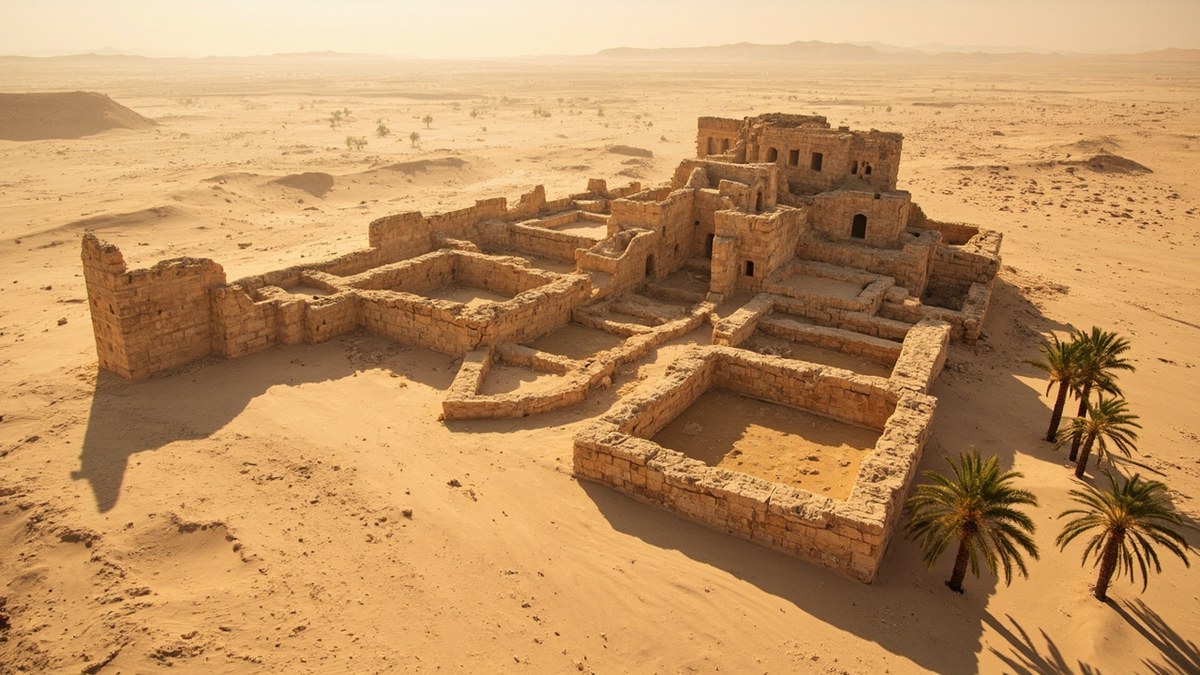
Deep in the Western Desert, at Ain El-Sabil in the Dakhleh Oasis, excavators have uncovered the grid-planned foundations of a fortified city inhabited in the fourth century A.D. Hisham El Leithy of the Supreme Council of Antiquities confirmed that the streets, open squares, and a central basilica were laid out on a regular plan, the kind of urban blueprint more typical of Nile-side late antique centers than remote oasis settlements.
The city adds a new dot on the map of late antique Egypt. Trade routes connecting the oasis to the Nile would have made Ain El-Sabil a logistics hub, and the basilica points to a sizable Christian community. This is one of the more striking hidden history facts 2026 finds for readers interested in urban archaeology: a planned fourth-century city, hidden in plain sight, now mapped in plan view for the first time.
A Possible Timber Circle Detected Beneath Scotland’s Machrie Moor
Geophysicists testing magnetometry equipment on Machrie Moor, on the Isle of Arran, picked up anomalies buried under the peat. The readings suggest a previously unknown timber circle hidden beneath ground that already hosts six famous stone circles dated to between 3500 and 1500 B.C. The team was not searching for monuments when the anomalies first appeared on screen.
If confirmed by excavation, the find would extend the known distribution of timber circles, a lowland form, into the Scottish uplands. The discovery also explains why crop marks on the moor never quite lined up with the visible stone settings. Among hidden history facts 2026 from Britain, this is the kind of non-invasive find that may reshape the country’s ceremonial site map without ever moving a shovelful of dirt.
Hidden History Facts 2026: Nine Lost Inscriptions Surface at the Phrygian City of Acmonia
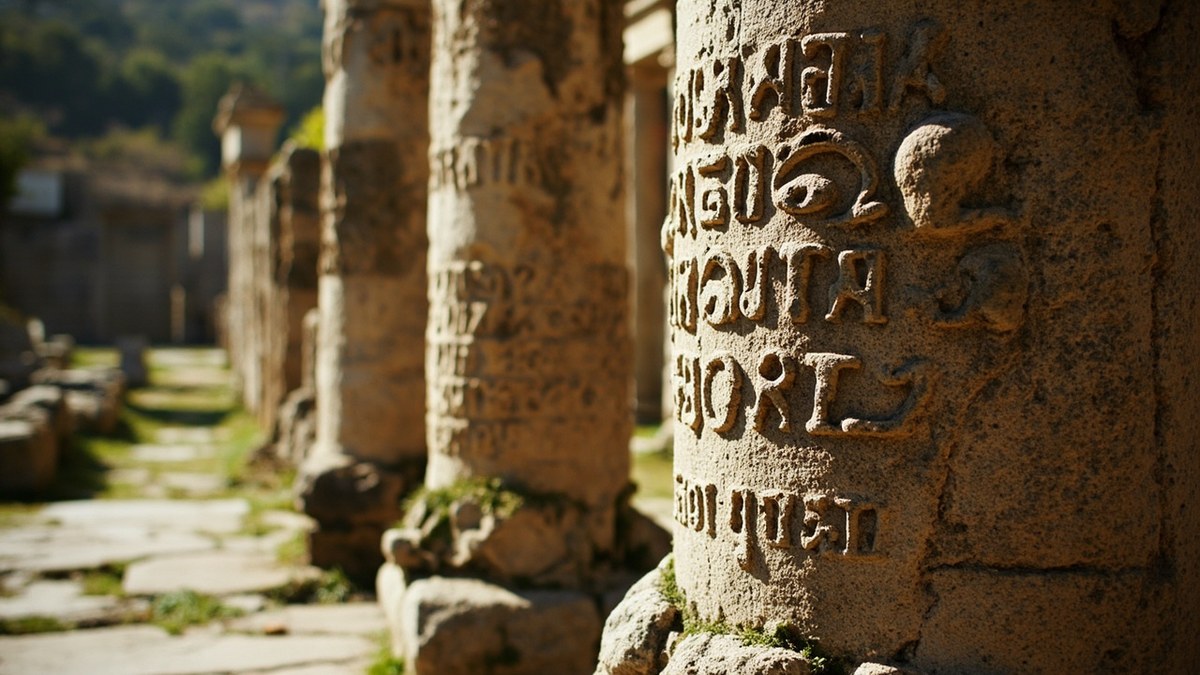
Nine inscriptions have surfaced in western Turkey at the site of the ancient Phrygian city of Acmonia, near modern Banaz. One of the texts records that Demades, son of Dionysogenes, commissioned a torch-bearing statue, a lampadephoros, in honor of his priestly role. Demades was already known to scholars from an earlier inscription, but the new finds flesh out his family line and clarify the civic calendar.
Acmonia had a long-quiet stretch in its epigraphic record, and these inscriptions help bridge that gap. They include honorific decrees, a list of city officials, and a fragment of a dedicatory stele. For readers following hidden history facts 2026 in the classical world, the Acmonia texts are a small but important reminder that even well-known Anatolian cities can still yield new documents from the backfill of older trenches.
Scythian DNA Study Maps the Family Ties Behind the Burial Mounds
A team led by Ayshin Ghalichi of the Max Planck Institute for Evolutionary Anthropology and Ainash Childebayeva of the University of Texas at Austin has analyzed DNA from 85 Scythians buried across central Asia between about 900 and 200 B.C. Of those, 38 were buried with elite grave goods, which let the researchers compare elite lineages to the broader population.
The genetic data show that elite status among these Iron Age Scythians passed largely through maternal lines across multiple generations. The study also documents a striking amount of female mobility between burial mounds, suggesting that brides, not grooms, often moved to join elite households. This is one of the more socially revealing hidden history facts 2026 stories to come out of ancient DNA work this year.
A Free Black Man’s Tombstone Identified in Colonial Boston
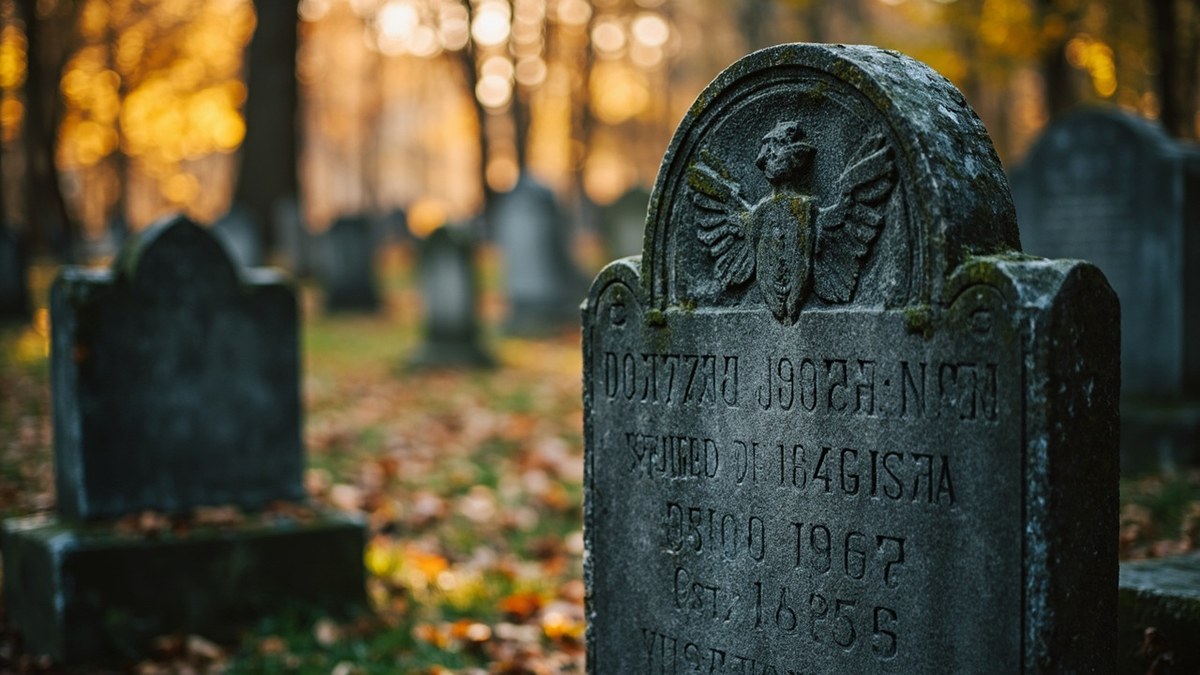
Conservationists working in Boston’s Granary Burying Ground, established in 1660 and home to more than 5,000 graves, have identified the gravestone of a formerly enslaved man who died in the early eighteenth century. The marker, inscribed simply “Boston,” had weathered almost smooth over the centuries. Cross-referencing with colonial burial records confirmed that the man had been freed during his lifetime, making the stone one of the earliest legible markers of an African-descended individual in colonial New England.
The find gives historians a rare named witness from a community that left few written traces. Researchers tied the burial to a small cluster of free Black residents documented in Boston tax rolls from the 1710s and 1720s. Among hidden history facts 2026, this is the kind of recovery that quietly rewrites a city’s social history rather than its monuments.
France Returns Twenty-Three Syrian Artifacts After More Than a Decade
At the Umayyad Mosque in Damascus, French President Emmanuel Macron formally handed over 23 artifacts to Syrian President Ahmed Al-Charaa. The objects had been on loan to the Arab World Institute in Paris since 2011 and were originally scheduled for return in 2014. The outbreak of the Syrian civil war canceled those plans, and the collection, which includes a section of a frieze from the ancient city of Palmyra, sat in French custody for over a decade.
The handover closes one of the more politically delicate chapters in the recent cultural-property record. Conservation work on the Palmyra fragment had identified it as part of a funerary relief looted from a tomb outside the ancient city in the early 2000s. The return sets a precedent for wartime-loan agreements that lapse into peacetime.
Hidden History Facts 2026: A 3,800-Year-Old Ritual Cache from Peñico, Peru
Excavations led by archaeologist Ruth Shady Solís at the main public structure of Peñico, on the Pacific coast of Peru within the Ministry of Culture’s Caral Archaeological Zone, have uncovered a ritual offering tied to the consecration of a platform some 3,800 years ago. The cache contained carved figurines and ceremonial objects arranged around a central sunken hearth, mirroring the layout of older Caral-Supe temples.
The find confirms Peñico as a major ceremonial center that flourished alongside the better-known Caral-Supe civilization, rather than a peripheral settlement. The figurines show stylistic links to both highland and coastal Andean traditions. As one of the verified hidden history facts 2026 stories from the Americas, the Peñico cache is the clearest piece of evidence yet that the Norte Chico world extended well beyond the Supe valley.
A 100-Million-Year-Old Ichthyosaur Buried in a Roman Pit in Britain
In Colchester, England, archaeologists excavating a Roman pit dated to the second century A.D. found a 100-million-year-old ichthyosaur fossil alongside a possible cat burial, a horse tooth, fragments of pottery, and a Roman ligula, a long-handled spoon used to retrieve perfumes or medicines. The Roman artifacts are clearly second-century, but the marine reptile is Cretaceous, which means the fossil was almost certainly picked up from older deposits and re-deposited as Roman fill.
“In several parts of the English coastline, an isolated, perhaps heavily wave-worn fossil might turn up, but to find one in a sealed Roman context is unusual,” said the field director. The discovery gives paleontologists a fresh look at how Romans reused local geological resources. Among hidden history facts 2026 from Britain, this is one of the most unusual juxtapositions of deep time and historical period to surface in the past month. The find also stands as a reminder that the same hidden history facts 2026 cycle can deliver both Iron Age burials and Cretaceous reptiles in the same week.
Related Reading
If you enjoyed these hidden history facts 2026 finds, you may also like our other recent History and Science coverage on Viral Untold:
- Historical Secrets Revealed 2026: 10 Amazing Finds
- 10 Most Ancient History Nobody Knows 2026: Discoveries That Rewrite the Past
- Bizarre Medical Cases 2026: 10 Amazing Patient Cases
- Scientific Discoveries 2026 Breakthrough: 10 Amazing Stories
Frequently Asked Questions
What counts as a “hidden history fact”?
Hidden history facts are verified archaeological, epigraphic, or genetic findings that were not previously visible in the documentary record. The hidden history facts 2026 entries we covered include a sixth-century B.C. tomb, a fourth-century A.D. city, ancient DNA results, and a gravestone that had weathered almost smooth. They share a common thread: a fresh recovery, not a re-interpretation of older evidence.
Where can I read the original reports behind these finds?
All ten stories we covered are sourced from Archaeology Magazine’s 2026 news archive, with secondary coverage in LiveScience. Both outlets publish datelined dispatches that quote the lead researchers directly, and they cite peer-reviewed journals such as iScience, Nature Communications, and PLOS One when the underlying paper is available.
Why are these stories grouped under “hidden history facts 2026”?
Each of these finds sat unnoticed, misidentified, or buried under sediment for years, sometimes centuries. Grouping them under hidden history facts 2026 lets readers compare how different regions and time periods are quietly producing major recoveries in the same news cycle. It also highlights the global distribution of recent archaeological fieldwork, from Peru to Norway to Egypt.
How were the ten stories selected?
We drew only from dispatches published in the first ten days of July 2026 by major archaeological newsrooms. We filtered for stories that included a primary on-the-record quote from the lead researcher, a verified site location, and a date for the underlying find. Drafts, rumors, and unverified reports were excluded.
Are these finds peer-reviewed?
Several have associated peer-reviewed publications, including the Scythian DNA study and the Phrygian inscriptions work. Others, like the Boston gravestone identification, rely on archival cross-referencing rather than journal publication. Either way, the underlying evidence is publicly accessible at the excavation reports, museum collections, or cemetery records cited in each piece.
What is the oldest hidden history facts 2026 entry?
The ichthyosaur fossil found in a Roman pit in Colchester is by far the oldest at roughly 100 million years old. The youngest is the early eighteenth-century gravestone of a free Black man in Boston. Most of the other finds date to between the sixth century B.C. and the fourth century A.D.
Additional authoritative resources you can verify:
National Geographic History
Encyclopaedia Britannica
Smithsonian Magazine History
Conclusion
Hidden history facts 2026 show that the year’s most striking recoveries are spread across six continents and twenty centuries. From a sixth-century B.C. princely tomb in Italy to a 3,800-year-old ritual cache in Peru, the past month of archaeological news has rewritten small but important chapters of the human record. We will keep tracking new finds as they surface, and update this page when major hidden history facts 2026 discoveries are announced. Each new recovery sharpens our sense of how much of the past is still genuinely hidden, even in places we thought we already knew.
Have a story tip or a hidden history fact you think deserves coverage? Reach out via our contact page. We verify every lead against primary sources before publishing.