Cave Painting Discovery 2026: 10 Best Proven Records Worth Watching
If you have ever wondered what humans were doing in caves 13,000 years ago, this rock art cycle delivers some of the most concrete answers yet. Across France, Mexico, Croatia, Russia, Oman, Egypt, Kazakhstan, Spain, and Venezuela, researchers have been pulling dates, pigments, and stone-pecked panels out of the dark.
This guide walks you through the ten most notable entries from the cave painting discovery 2026 wave, why each one matters, and what the data is telling us about the people who made the marks. Pull up a chair, the stone walls are talking.
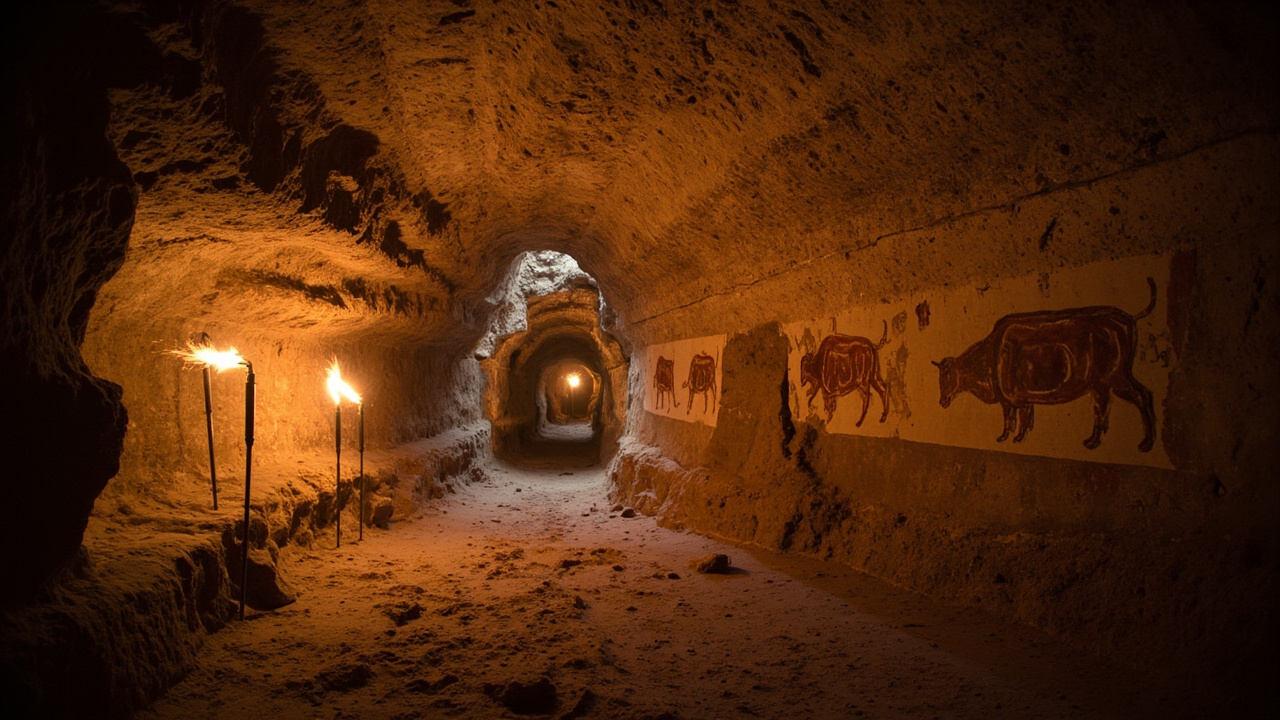
Table of Contents
- The First Absolute Dating of Paleolithic Paintings in Font-de-Gaume
- An Egyptian Rock Art Panel Depicting a Terrifying Sinai Conquest
- Stone Archives in Kazakhstan: 4,000 Years of Petroglyphs in One Gorge
- A Greek Theatre Mask Found in an Illyrian Cave — A Cave Painting Discovery 2026 Surprise
- Hidalgo, Mexico: 16 Rock Art Features Including a Figure of Tlaloc
- Oman’s Hajar Al Sinanat Rock Art: Animals, Humans, and Geometry — A Cave Painting Discovery 2026 Treasure
- A Medieval Chapel Discovered Inside a Spanish Cave
- Siberian Petroglyphs That Reshape Three Millennia of Khakassian History
- Valdecañas Range: Nine Rock Art Sites Inside a Mexican Ritual Region — A Cave Painting Discovery 2026 Cluster
- A 4,000-to-8,000-Year-Old Petroglyph of the Chaima and Kariña Peoples
- Frequently Asked Questions
- Related Reading
- Conclusion
The First Absolute Dating of Paleolithic Paintings in Font-de-Gaume — A Cave Painting Discovery 2026 Milestone
For more than a century, the bison, horses, and deer drawn on the walls of Font-de-Gaume in the Dordogne were dated by style and comparison. A team using imaging and carbon-14 analysis pulled the first absolute dates in March 2026, and one bison came back at over 13,000 years old.

That single number is the kind of anchor the field has been waiting for, because style-based guesses were off by thousands of years in some cases. The researchers, working through the Institut Pierre-Simon Laplace, treated the pigment samples with the same care most labs give to bone.
The result is a hard anchor that lets every other find be cross-referenced against a real calendar. If you have ever read a museum placard that said “circa 17,000 years ago,” this is the work that will quietly rewrite those placards over the next decade.
Why absolute dating changes the field
Previous age estimates for Paleolithic cave paintings relied on stylistic comparison and the dating of nearby artifacts. Both methods left wide error bars. The new approach gives a calendar year within a few centuries, which is enough to compare a French bison to a Spanish aurochs to a Sinai battle scene on the same time grid.
The Font-de-Gaume result, documented in the Wikipedia 2026 in archaeology roundup, is the first dot on a much older graph.
An Egyptian Rock Art Panel Depicting a Terrifying Conquest of the Sinai — A Cave Painting Discovery 2026 Reveal
On 29 January 2026, Live Science reported a 5,000-year-old rock art panel from ancient Egypt that shows what archaeologists called a “terrifying” conquest of the Sinai Peninsula. The panel preserves weapons, prisoners, and a clear hierarchical composition that researchers are still decoding.
As an entry in the panel, it sits at the seam between prehistoric ritual and organized state violence. The find is striking because the documentary ambition is unusually high. The artists did not just draw animals or abstract spirals; they drew an event.
A 5,000-year-old image of a military campaign is rare in any region, and rarer still in rock art form. The rock art record is now richer because of it, and the panel is forcing scholars to revisit how states used public art 3,000 years before the classical pharaohs. The original reporting is in Live Science’s archaeology section.
Stone Archives in Kazakhstan: 4,000 Years of Petroglyphs in One Gorge
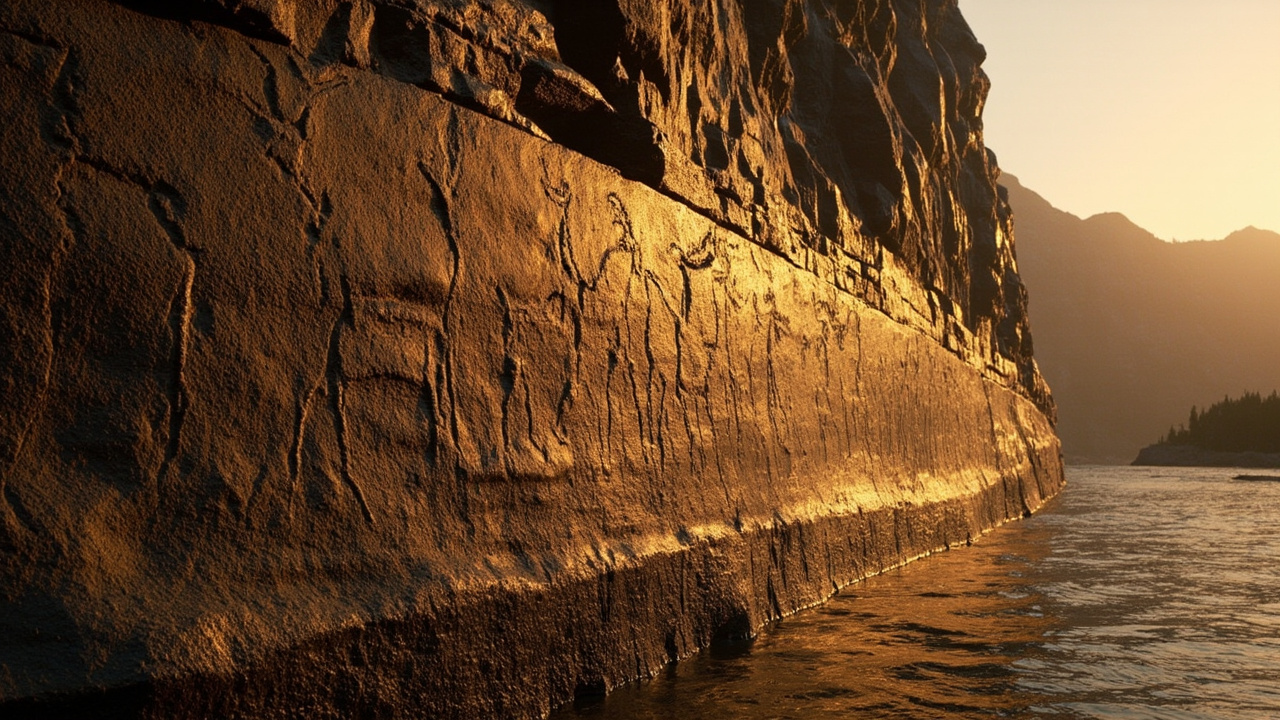
On 12 June 2026, the A. Kh. Margulan Institute of Archaeology announced a major Zhualy district find of the Jambyl region. Researchers described the petroglyphs as an archive carved and re-carved over nearly 4,000 years, from the late 3rd millennium BC through the medieval period.
Five clusters run along the gorge’s stream bed, layering Bronze Age, Early Iron Age, and Middle Ages imagery on the same rock faces. The longevity is the story. Most cave art survives in single-period panels because later groups seldom respected the old carvings.
In Zhualy, three dozen generations of nomadic peoples kept returning to the same stretch of cliff and adding their own grammar of animals, riders, and weapons. The full write-up is in HeritageDaily’s Kazakhstan coverage.
What the five clusters tell us
Each cluster along the gorge has a different density and a different mix of motifs. Earlier panels are dominated by aurochs and wild horses. Later additions include saddled riders and composite bows.
The progression is clean enough that the panels can be ordered almost by eye, which is unusual for a multi-period of multi-period petroglyphs. The Margulan Institute plans a full digital survey and a side-by-side comparison with rock art from the Altai and Tian Shan ranges.
A Greek Theatre Mask Found in an Illyrian Cave — A Cave Painting Discovery 2026 Surprise
On 21 April 2026, HeritageDaily reported an intact Greek terracotta theatrical mask dating to the 4th or 3rd century BCE, found in the Crno Jezero Cave on Croatia’s Pelješac Peninsula. The Crno Jezero find is less about pigment and more about ritual.
The mask was associated with an Illyrian sanctuary that shows clear cultural interaction between Illyrian communities and the Greek world. The find is significant because it confirms that Illyrian sacred caves were not closed to outside influence.
Greek theatrical traditions, including the production of comic and tragic masks, had reached the eastern Adriatic in a portable, durable form. The Crno Jezero record also rewrites what we expect to find in ritual caves; the assumption that sanctuary deposits were strictly local is now under pressure.
Hidalgo, Mexico: 16 Rock Art Features Including a Figure of Tlaloc
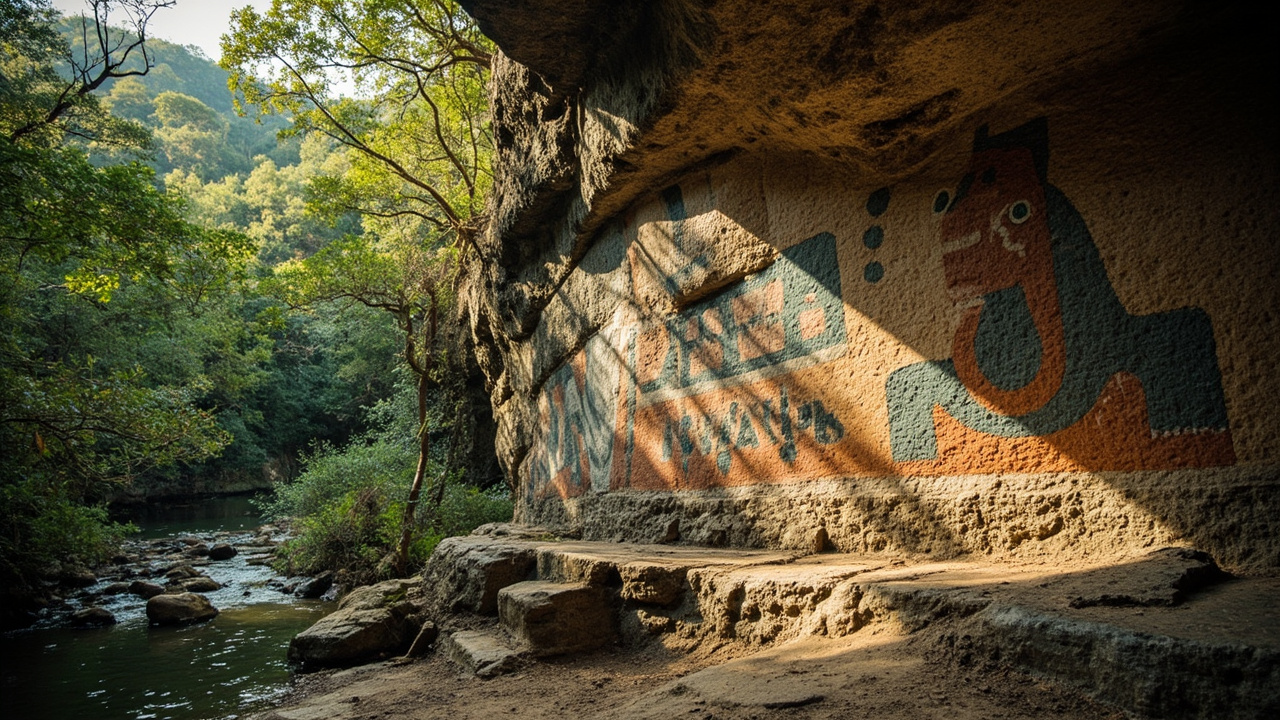
In April 2026, Mexico’s National Institute of Anthropology and History (INAH) documented 16 rock art features near the Tula River and La Requena Dam in Hidalgo. The Hidalgo find included petroglyphs and painted images spanning prehistoric times through the Mesoamerican Postclassic era (AD 900–1521).
Some painted forms are now estimated at more than 4,000 years old. One figure shows the goggle-like eyes and headdress of Tlaloc, the rain god. Another carries a chimalli, a Mesoamerican shield.
The Hidalgo find is the first solid prehistoric-to-Postclassic sequence from this stretch of the Tula valley, and the Tlaloc figure alone is enough to put the site on the map for any Mesoamerican studies seminar. The discovery was made during survey work linked to the Mexico City–Querétaro passenger rail project, which means more panels are likely to surface as the line is built.
Why the Tlaloc identification matters
Tlaloc imagery is found from Teotihuacan to Tikal, but the earliest iconography is usually carved in stone, not painted on a cliff. A painted Tlaloc panel in a Hidalgo rock shelter pushes the painted-Tlaloc record into a wider geographic range.
The Hidalgo result is small in absolute terms, just one figure, but it is dense in interpretive meaning.
Oman’s Hajar Al Sinanat Rock Art: Animals, Humans, and Geometry — A Cave Painting Discovery 2026 Treasure
On 13 February 2026, archaeologists working in the Hajar Al Sinanat, near Al-Khaboura in Oman, documented a rock art site containing animal figures, human forms, and geometric carvings created using the rock-pecking technique. The Omani find joins a growing list of Arabian Peninsula sites that are pushing back the assumed reach of prehistoric visual culture.
The rock-pecking technique is the most labor-intensive of the major rock art methods. Each motif is built by tapping the stone with a harder hammer-stone, sometimes for hours per figure.
The Oman record is therefore a record of significant time investment, and the mix of animals, humans, and geometry suggests a site that served multiple social purposes over a long period.
A Medieval Chapel Discovered Inside a Spanish Cave

On 21 April 2026, HeritageDaily reported the discovery of a medieval chapel inside a natural Spanish cave. The Spanish find is unusual because it crosses the boundary between prehistoric ritual and Christian sacred space.
Medieval chapels inside natural caves are rare, but they are not unheard of. The Spanish record contains a handful of examples, and each one tells a story about how local populations reused old sacred sites.
The chapel preserves architectural traces and at least one painted panel. Researchers are still working out the chronology. The Spanish find is a useful reminder that cave art is not a single-period phenomenon.
In many regions, the same cave was used for thousands of years, with each generation adding its own layer of meaning.
Siberian Petroglyphs That Reshape Three Millennia of Khakassian History
In March 2026, the Institute of the History of Material Culture of the Russian Academy of Sciences announced a find at the Ust-Kamyshta-1 and Kamyshta-3 burial grounds in the Askizsky district of Khakassia.
The excavations, conducted between 2021 and 2023 by the Sayan Archaeological Expedition, documented continuous use over more than three thousand years, from the Early Bronze Age in the 3rd millennium BC through to early AD.
The site’s value is the continuity. Most Khakassian burial grounds have only one or two cultural phases. The Ust-Kamyshta-1 find and Kamyshta-3 contains funerary complexes from nearly every major archaeological culture identified in the region.
That makes it a single-site reference library for the entire prehistory of the Minusinsk Basin. The petroglyphs themselves are dense, and the survey is still ongoing.
What the rescue operation saved
Both burial grounds were set to be impacted by industrial development in the early 2020s. The Sayan Archaeological Expedition was a rescue operation, and the Khakassian record is partly a record of what would have been lost without the surveys.
The publication in 2026 is also a lesson about how much of the Siberian rock art record is still undocumented and how quickly it can be threatened by infrastructure work.
Valdecañas Range: Nine Rock Art Sites Inside a Mexican Ritual Region — A Cave Painting Discovery 2026 Cluster
In July 2026, HeritageDaily reported that INAH researchers had discovered additional rock art sites in the Valdecañas range, bringing the total number of known sites to nine. The Valdecañas work features painted panels extending up to 20 metres across rock walls and ceilings, with geometric designs, animal figures, and human figures.
One site, located within the centre of a stream, is identified as a ritual gallery associated with fertility and hunting ceremonies. The five-kilometre stretch of rugged terrain now reads as a single ceremonial region rather than a scatter of unrelated panels.
The result is a textbook example of how context matters. The same motif, distributed across nine sites, becomes evidence of a regional ritual system rather than isolated decoration.
A 4,000-to-8,000-Year-Old Petroglyph of the Chaima and Kariña Peoples
Earlier in 2026, researchers in Venezuela announced a petroglyph estimated to be between 4,000 and 8,000 years old, likely linked to the cultural legacy of the Chaima and Kariña peoples. The find, in the Cedeño Municipality of Monagas, is a rock art panel that connects contemporary Indigenous heritage with the deep-time record of the Orinoco basin.
The estimate range is wide because the petroglyph lacks organic material for radiocarbon dating, but the technique and the iconography are consistent with much older dated examples from the broader Llanos region.
The Venezuelan find is also a reminder that the rock art record is not just European. The Llanos petroglyphs get less press coverage than the Dordogne bison, but the data is just as solid, and the local communities have a direct cultural claim on the imagery.
Frequently Asked Questions
What is the most important cave painting discovery 2026 so far?
The first absolute dating of Paleolithic paintings in Font-de-Gaume is the most consequential find for the field. Other finds are more visually dramatic, but Font-de-Gaume gives researchers a hard calendar to anchor every other site against.
Where are the biggest cave painting discovery 2026 sites located?
The rock art record is genuinely global. The biggest named sites are in Dordogne (France), Hidalgo and the Valdecañas range (Mexico), Khakassia (Russia), Kazakhstan’s Jambyl region, Oman, and Croatia’s Pelješac Peninsula. Spain and Venezuela add two more.
How old is the oldest cave painting discovery 2026 find?
The Font-de-Gaume bison is dated to over 13,000 years old, making it the oldest dated cave painting with an absolute date. Some of the Hidalgo painted forms may be older than 4,000 years, but those dates are still under review.
Why is the Valdecañas range significant?
The Valdecañas range hosts nine known rock art sites spread across a five-kilometre stretch. The cave painting discovery 2026 transforms the area from a scatter of panels into a single ceremonial region, with motifs that suggest ritual activity tied to fertility and hunting.
What did the Greek theatrical mask find in Croatia tell us?
A 4th-to-3rd-century BCE Greek terracotta theatrical mask was found in the Crno Jezero Cave on Croatia’s Pelješac Peninsula. The cave painting discovery 2026 confirms that Illyrian sanctuary caves were open to Greek cultural influence, including the production of theatrical masks.
Are any cave painting discovery 2026 finds in danger from development?
The Siberian petroglyphs at Ust-Kamyshta-1 and Kamyshta-3 were rescued from industrial development. The Hidalgo, Mexico rock art was found during survey work for a passenger rail project. Both cave painting discovery 2026 stories show how much remains undocumented and how quickly infrastructure can threaten it.
How can I keep up with new cave painting discovery 2026 findings?
HeritageDaily, the Wikipedia “Year in archaeology” pages, and the news sections of Live Science and Archaeology Magazine are the most reliable cave painting discovery 2026 sources. The Wikipedia pages are updated weekly and cite the primary press releases.
Related Reading
- Roman Empire Discoveries 2026: Hidden Tombs and Lost Cities
- Hidden History Facts 2026: Things Schools Never Taught You
- Most Ancient History Nobody Knows 2026
- Shocking Historical Facts 2026 That Changed Everything
Conclusion
The 2026 wave is more than a parade of dated panels. It is a quiet revolution in how we read the deep-time record. Every entry added this year has either fixed a calendar date, broadened the geographic range, or opened a new interpretive window onto ritual, politics, and exchange.
Read together, the ten records above tell a story about what humans have always done in caves: drawn the world as they saw it, and trusted that someone, someday, would come back to read it.
That day has arrived.
ViralUntold
Editor at ViralUntold. Filing dispatches on the stories behind the headlines.

More from History
Other stories in the History beat, filed continuously by the ViralUntold desk.